
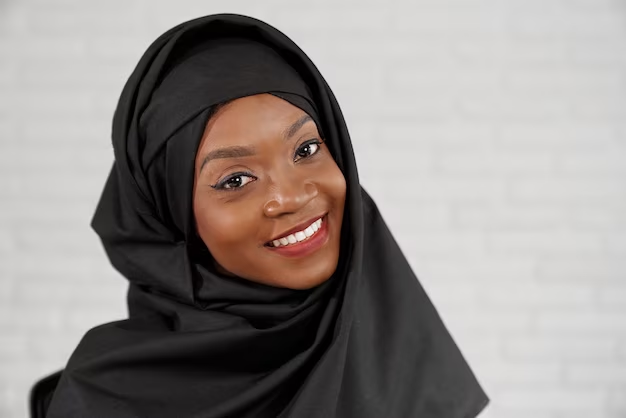
5 Reasons Muslim Women Wear Hijab Aside Religion


The hijab, often seen as a distinctive emblem of Islamic culture, is more than just a religious artifact.
While it’s commonly known that many Muslim women wear the hijab as part of their faith, this headscarf represents a myriad of personal, cultural, and social values that transcend religious mandates.
Here are some reasons why Muslim women might choose to wear the hijab aside from religious obligations.
Tradition attire
In various parts of the world, the hijab is not merely a symbol of religious identity but a rich element of cultural heritage. For centuries, in regions from the Middle East to parts of Asia and Africa, the hijab has been part of the traditional attire, worn often irrespective of religious observance.

It ties women to their roots, acting as a living bridge to generations past. By donning the hijab, many women pay homage to their ancestors and celebrate their deep-rooted cultural traditions, reinforcing their connection to their community and its history.
A form of empowerment
Contrary to the widespread belief that the hijab might be a tool of oppression, countless women find it empowering. It offers them control over how they are perceived in public, helping them assert their identity on their terms.

The hijab can be a statement of independence against the relentless beauty standards propagated by mainstream media. By choosing what parts of their body to show, women reclaim authority over their personal image and challenge the societal norms that dictate how a woman should look.
It’s a symbol of political expression
In some settings, the act of wearing a hijab transcends personal or cultural significance and enters the realm of political protest. In countries where Muslims are a minority or where Islamic attire faces legal scrutiny and societal bias, the hijab becomes a potent symbol of resistance and resilience.

It is a declaration of identity in the face of adversity, a banner under which many women rally to fight discrimination, assert their rights, and shatter the pervasive stereotypes about Muslim women.
It strengthens community connection
The hijab also serves as a marker of belonging, signifying membership within the Muslim community. It acts as a visual cue that connects women with similar faiths across diverse cultures.

This sense of belonging can be particularly comforting in places where Muslims are minority groups, providing a sense of solidarity and shared identity. Wearing the hijab can help strengthen communal ties and foster a supportive network among women who share common values and beliefs.
Protection and privacy
Finally, many women choose to wear the hijab for reasons of privacy and protection. The hijab offers a physical barrier between the wearer and the public eye, allowing women to maintain their modesty and reserve their beauty for private spaces with family and close friends.

In cultures where modesty is highly prized, the hijab shields women from unwanted attention and potential objectification.


Eid al-Fitr 2026: Saudi Arabia Says Weather Conditions Still Unclear
Saudi Arabian authorities have said weather conditions remain unclear as the country begin…

Eid al-Fitr 2026: Saudi Arabia Says Weather Conditions Still Unclear
Saudi Arabian authorities have said weather conditions remain unclear as the country begins efforts …


1 Comment