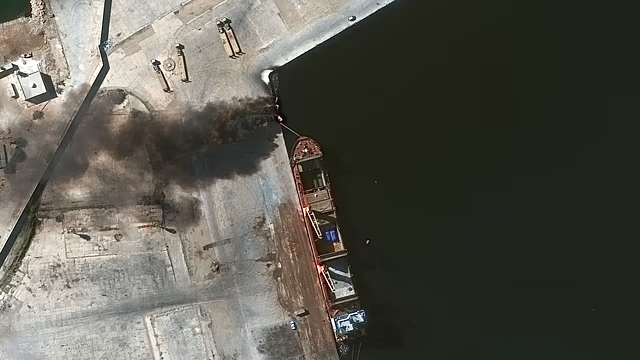
Algeria on Thursday condemned what it described as the “spillover” of the war in Ukraine into Libyan territory, following drone strikes that targeted Russian naval vessels in Libyan waters.
The diplomatic condemnation follows a series of aerial attacks on Sunday, where Ukrainian drones allegedly targeted two Russian vessels off the eastern coast of Libya. The strikes resulted in the sinking of a Russian warship and an attack on a cargo ship operating within Libyan maritime jurisdiction.
The incident has also resulted in human casualties, with two Libyan soldiers confirmed dead during the operations. The escalation marks a significant and dangerous shift in the geography of the ongoing conflict between Kyiv and Moscow, moving the theatre of operations toward the North African coast.
In a statement released following the attacks, Algerian authorities expressed grave concern over the regional implications of the strikes. The move is seen as an attempt by Algiers to maintain its long-standing position of promoting stability within the Maghreb and preventing the North African corridor from becoming a secondary front in the global conflict.
The presence of Russian naval assets in the Mediterranean has long been a point of geopolitical contention. The targeted strikes suggest that Ukraine is increasingly willing to pursue Russian maritime interests far beyond the Black Sea, a development that has caught regional powers off guard.
Maritime and Energy Security Implications
The expansion of hostilities into the Mediterranean presents immediate risks to maritime trade and the stability of energy supply chains. Libya, a critical player in the African energy landscape, relies heavily on its maritime corridors for the export of crude oil and natural gas.
Increased military activity in Libyan waters threatens to disrupt shipping lanes that are vital for both regional commerce and European energy security. If the Mediterranean becomes a zone of active conflict between proxy or direct actors, insurance premiums for commercial vessels in the region are expected to rise sharply.
Furthermore, the involvement of foreign combatants in Libyan waters complicates the security environment for the Libyan National Oil Corporation (NOC) and other commercial entities operating in the region. Any perceived threat to offshore infrastructure or maritime export routes could lead to volatility in oil prices and disruptions in production schedules.
Security analysts suggest that the use of long-range drone technology to strike naval targets in North Africa demonstrates a new level of tactical reach. This capability may force Mediterranean coastal states to increase their maritime patrol budgets and rethink their naval defence postures.
The political instability in Libya has historically made the country vulnerable to external influence. The recent strikes suggest that the country’s territorial waters are now being utilised as a tactical space for global powers, further complicating the domestic efforts to achieve a unified political settlement.
As reported by Africanews, the Algerian government’s reaction underscores a broader fear of regional contagion. For Algeria, a country that has invested heavily in regional mediation, the prospect of a high-intensity conflict involving major powers on its doorstep is a significant strategic threat.
The international community is now closely monitoring whether these strikes represent an isolated incident or the beginning of a broader pattern of Ukrainian operations targeting Russian assets in the Mediterranean. The diplomatic response from the African Union and other regional bodies is expected to follow as the full extent of the naval damage is assessed.
For businesses operating in North Africa, the primary concern remains the potential for increased maritime insecurity and the possible impact on regional trade routes. Authorities in neighbouring countries are likely to convene emergency security meetings to discuss enhanced coastal surveillance and the protection of critical maritime infrastructure.
Explore more Business stories and analysis from Business Elites Africa.