For many Nigerian exporters, winning an international buyer is not the hardest part of the business. The struggle often begins after the order is confirmed. From warehouse movement to port access, documentation, inspection, terminal charges, and vessel delays, exporting through Apapa can turn a profitable deal into a financial headache.
Apapa remains Nigeria’s most important port gateway. It handles a large share of the country’s maritime trade and supports thousands of exporters, freight forwarders, truckers, clearing agents, and logistics firms. But the cost of moving goods through the port has become a major burden for businesses.
It is about money trapped in delays, inflated logistics bills, missed shipping windows, demurrage, storage charges, and uncertainty. For exporters, every extra day can reduce profit, damage customer trust, and weaken Nigeria’s competitiveness.
Why Apapa Matters to Nigerian Trade
Apapa plays a central role in Nigeria’s export economy. Agricultural goods, manufactured products, raw materials, and processed commodities often pass through the port before reaching international buyers.
For small and medium exporters, Apapa can determine whether a business grows or fails. Many exporters operate on tight margins. They need predictable costs and reliable timelines. When port access becomes expensive and unpredictable, they lose control over pricing.
A buyer in Europe, Asia, or the Middle East wants delivery certainty. If Nigerian exporters cannot meet timelines, buyers may turn to suppliers from Ghana, Côte d’Ivoire, Kenya, Morocco, or South Africa. That means Nigeria loses more than one shipment. It can lose long-term trade relationships.
The Real Cost Behind Port Gridlock
The hidden cost of Apapa starts with inland transport. Moving a container from a warehouse to the port can attract high trucking fees due to traffic, security risks, waiting time, and poor road access. Transporters often factor uncertainty into their prices.
Then come documentation and inspection costs. Exporters must deal with multiple agencies, certifications, freight forwarding charges, terminal handling fees, and other formal or informal expenses. Even when the exporter follows every rule, delays can still happen.
Demurrage and storage charges make the situation worse. If a container misses its loading window or stays too long within the port system, the exporter may pay extra. These charges can destroy profit, especially for low-margin goods.
For perishable or semi-perishable exports, delay carries another risk. Product quality may fall before shipment. That can lead to rejection, discounts, or reputational damage.
Global Shipping Pressure Adds More Pain
Local congestion is not the only problem. Global shipping disruptions can increase freight rates and reduce vessel availability. When conflict, route changes, or regional instability affect shipping lanes, Nigerian exporters feel the impact through higher costs and longer transit times.
This creates a double burden. Exporters already face local port inefficiencies. They now also face external shocks that they cannot control.
A stronger port system would help exporters absorb global pressure. But when local systems remain weak, every global disruption hits harder.
Why This Hurts Nigeria’s Export Ambition
Nigeria wants to grow non-oil exports. That goal makes sense. The country needs more foreign exchange, more jobs, stronger manufacturing, and wider access to global markets.
But export growth cannot depend only on speeches and policy documents. It needs working roads, efficient ports, digital documentation, faster inspection, transparent charges, and reliable shipping access.
If the cost of exporting remains too high, businesses will stay small. Some may abandon export plans completely. Others may underprice their products just to survive. That weakens profit and reduces tax revenue.
The Apapa crisis also affects the naira. When exporters struggle, Nigeria earns less foreign exchange. Lower export earnings increase pressure on the currency and reduce the country’s ability to finance imports.
What Government Must Fix
The government must treat port reform as an economic priority. Better road access is important, but it is not enough. Nigeria needs a full logistics reset.
Port procedures should become faster and more digital. Agencies should reduce duplication. Exporters should know every required payment before the process starts. Truck movement should follow a transparent call-up system. Rail links and inland dry ports should reduce pressure on Lagos.
Private sector operators also need predictable policy. Exporters cannot plan when rules change suddenly or when agencies act without coordination.
Expert View
The Apapa crisis is a competitiveness problem. It increases Nigeria’s export price before goods leave the country. That means Nigerian products may arrive in foreign markets already more expensive than rival goods.
The solution is not one reform. Nigeria needs coordinated action across transport, customs, port management, security, trade finance, and export documentation. A modern port system would help exporters, support the naira, create jobs, and increase non-oil revenue.
Why Nigerians Should Care
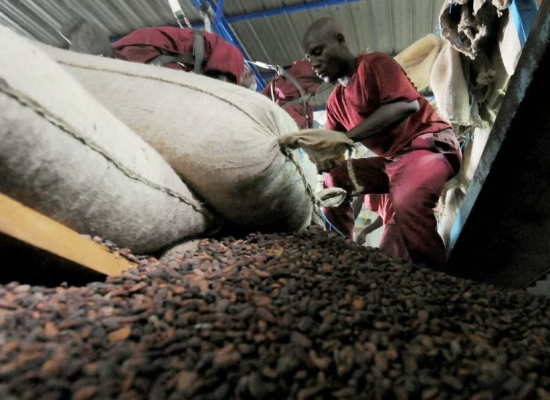
Many Nigerians may see Apapa as a Lagos problem. It is not. The crisis affects food exporters in the North, manufacturers in Ogun, cocoa traders in the South West, sesame exporters in the Middle Belt, and small businesses across the country.
When export costs rise, companies earn less. When companies earn less, jobs suffer. When exports weaken, Nigeria’s foreign exchange problem worsens.
Fixing Apapa is not just about clearing traffic. It is about making Nigeria a serious trading economy.
FAQs
Why is Apapa important to Nigeria’s economy?
Apapa is one of Nigeria’s busiest port gateways and supports import, export, logistics, manufacturing, and trade activity.
How does port congestion affect exporters?
It raises transport costs, delays shipments, increases storage charges, and can make Nigerian goods less competitive abroad.
What are hidden export costs?
They include trucking fees, documentation charges, inspection delays, demurrage, terminal fees, storage charges, and missed shipping windows.
Can Apapa problems affect the naira?
Yes. If exporters struggle to ship goods, Nigeria may earn less foreign exchange. That can increase pressure on the naira.
What is the best solution?
Nigeria needs better roads, digital port processes, coordinated agencies, transparent charges, stronger rail links, and faster export clearance.