
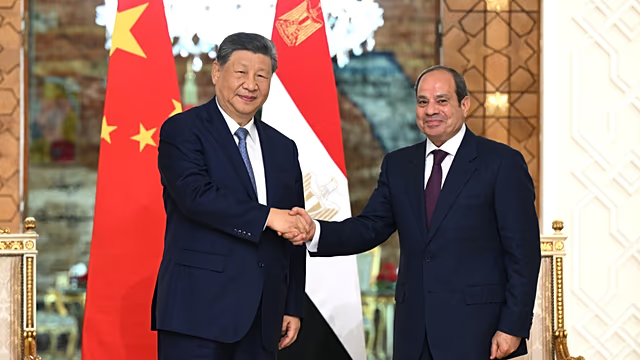
Egypt and China have signed a series of bilateral agreements focusing on technology, the digital economy, and broader economic cooperation to deepen strategic ties between the two nations.
The agreements were signed on Wednesday by President Abdel Fatah el-Sissi and Chinese President Xi Jinping. The deals target the acceleration of digital transformation within Egypt and the expansion of technological exchange between the two capitals.
The cooperation framework specifically addresses the digital economy, which includes the development of cloud computing, artificial intelligence, and electronic payment systems. These initiatives are intended to modernise Egypt’s administrative infrastructure and enhance the efficiency of its financial services sector.
This diplomatic engagement occurs as Egypt seeks to diversify its sources of foreign direct investment and reduce its reliance on traditional Western lending. By partnering with Beijing, Cairo aims to leverage China’s leadership in telecommunications and hardware manufacturing to build out its domestic tech ecosystem.
The agreements also include provisions for economic cooperation and joint ventures in high-tech manufacturing. This move aligns with Egypt’s broader strategy to transition from a consumption-based economy to one driven by industrial production and technology exports.
Digital Infrastructure and the Suez Canal Economic Zone
A central component of the cooperation involves the integration of Chinese technological expertise into the Suez Canal Economic Zone (SCZONE). China has already established a significant presence in the region through the TEDA-Suez Economic and Trade Cooperation Zone, which hosts numerous Chinese industrial firms.
The new deals are expected to transition the SCZONE from a traditional manufacturing hub into a smart industrial zone. This includes the deployment of 5G networks and automated logistics systems to improve the throughput of goods passing through the canal.
China’s approach in Egypt is a key part of the Belt and Road Initiative, which seeks to create a vast network of trade routes and infrastructure projects across Asia, Africa, and Europe. Egypt’s position as a gateway between the Mediterranean and the Red Sea makes it a critical node in this global strategy.
Industry analysts suggest that the digital economy agreements will likely benefit Chinese tech giants, particularly those involved in infrastructure and surveillance technology, as they secure long-term contracts for the rollout of Egypt’s digital grid.
From a regulatory perspective, the deals will require Egypt to align some of its digital standards with Chinese frameworks, potentially affecting how data is managed and stored within the country. This alignment could create a competitive advantage for Chinese firms over American and European tech providers in the local market.
The financial implications for Egypt include the potential for new concessional loans and grants tied to the implementation of these technology projects. While this provides immediate capital for infrastructure, it adds to Egypt’s existing debt profile with Chinese creditors.
The cooperation also extends to the energy sector, where technology transfers are expected to assist Egypt in its goal of becoming a regional energy hub, particularly in the realm of renewable energy and smart grid management.
The next phase of the agreement involves the formation of joint technical committees to define the specific timelines and funding mechanisms for the digital projects. These committees are expected to begin operations in the coming quarter to identify priority sectors for the first wave of implementation.
Explore more Business stories and analysis from Business Elites Africa.


