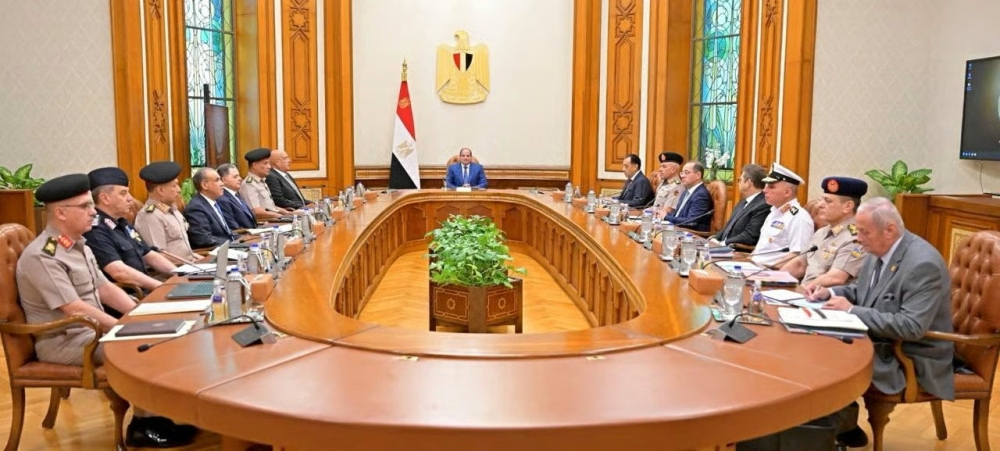
Egyptian President Abdel Fattah al-Sisi has affirmed Cairo’s commitment to defending Saudi Arabian territory against external threats, while explicitly ruling out any offensive military action in Yemen. The statement, as reported by The Africa Report, clarifies Egypt’s position amidst ongoing Houthi drone and missile attacks that continue to jeopardise the kingdom’s security and critical oil export infrastructure.
President Sisi’s remarks underscore a delicate balance in Egypt’s regional foreign policy: reinforcing strategic alliances with key Gulf partners like Saudi Arabia, a significant investor in the Egyptian economy, while avoiding direct military entanglement in the protracted Yemeni civil conflict. The clarification aims to manage regional expectations and mitigate the risks of broader escalation.
The defensive posture articulated by Sisi is particularly significant for global energy markets. Saudi Arabia remains the world’s largest oil exporter, and its ability to ensure the uninterrupted flow of crude oil is vital for global economic stability. Threats to Saudi oil facilities, such as the major attacks seen on Abqaiq and Khurais in recent years, have historically caused significant spikes in international oil prices, with direct consequences for African economies heavily reliant on oil imports.
For African nations, particularly those with burgeoning industrial sectors and a reliance on imported fuel, stable and predictable oil prices are crucial for economic planning and inflationary control. Any disruption in Saudi supply chains or a sustained increase in geopolitical risk premiums can translate into higher operational costs for businesses and increased living expenses for consumers across the continent.
Egypt’s Strategic Economic and Security Role
Egypt’s commitment to defending Saudi territory extends beyond mere political solidarity; it is deeply intertwined with its own economic interests and regional security. Saudi Arabia is a vital economic partner for Egypt, providing substantial investment, financial aid, and employment opportunities for Egyptian expatriate workers. Maintaining a strong, stable relationship with Riyadh is paramount for Cairo’s fiscal health and development agenda.
Furthermore, Egypt plays a critical role in safeguarding maritime security in the Red Sea, a crucial global shipping lane that connects Asia, Africa, and Europe via the Suez Canal. Unimpeded passage through this waterway is essential for international trade, including significant volumes of goods and oil destined for or originating from African markets. Instability in Yemen, particularly Houthi control over strategic coastal areas, poses a direct threat to this vital maritime corridor.
The Houthi movement, backed by Iran, has repeatedly targeted Saudi infrastructure, including oil refineries, airports, and military installations, using advanced drones and ballistic missiles. These actions have intensified regional tensions and placed pressure on Riyadh to bolster its defence capabilities and alliances. Sisi’s statement, therefore, serves as an assurance of a robust, albeit defensively oriented, support structure for Saudi Arabia.
While confirming defensive support, Egypt’s explicit decision to rule out attacking Yemen signals a reluctance to join the Saudi-led coalition’s offensive operations in Yemen. This stance reflects a cautious approach to regional conflicts, prioritising national interests and stability, particularly given the extensive economic reforms and infrastructure projects currently underway in Egypt that demand a focus on internal development rather than external military commitments.
The broader implications for African commerce are clear. Regional security directly influences investor confidence, trade routes, and commodity prices. Egypt’s carefully calibrated position seeks to contribute to a stable regional environment, which in turn supports predictable supply chains and more stable energy costs, benefiting the diverse economies of the African continent.
The ongoing regional tensions and the complex interplay of alliances mean that while Egypt has clarified its military role, the geopolitical landscape remains volatile. African businesses and policymakers will continue to monitor developments in the Red Sea and Gulf regions, understanding that security there has tangible effects on their own economic prospects.
Explore more Politics stories and analysis from Business Elites Africa.