
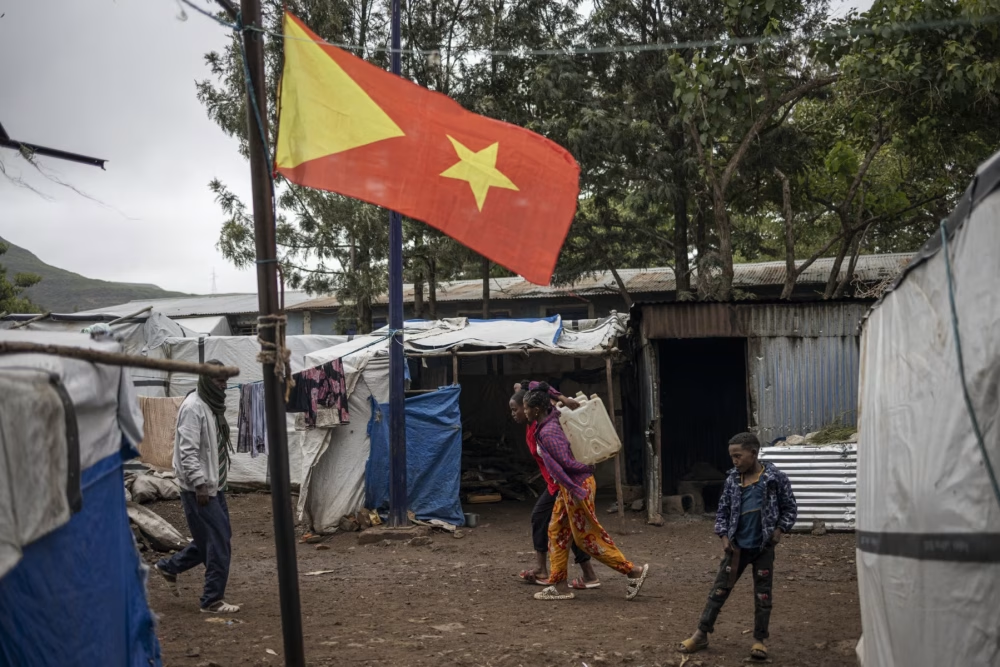
Ethiopia is facing accusations of conducting a drone strike near Mekelle, the capital of the Tigray region, marking a sharp escalation in security tensions after months of localized clashes and border skirmishes.
The attack, which occurred mid-morning, represents the first significant aerial operation reported in the vicinity of the regional capital since the signing of the Pretoria Peace Agreement in November 2022. Local sources and regional observers indicate that the strike targeted positions on the outskirts of the city, though the federal government in Addis Ababa has not yet issued a formal confirmation or denial of the operation.
This development comes at a precarious moment for the administration of Prime Minister Abiy Ahmed. For the past several months, Tigray’s borders have seen sporadic fighting, primarily between federal forces, regional militias, and remnants of forces loyal to the Tigray People’s Liberation Front (TPLF). The shift toward utilizing unmanned aerial vehicles (UAVs) near a major population centre suggests a change in military posture that could jeopardize the fragile ceasefire.
Threats to the Pretoria Peace Agreement
The 2022 Permanent Cessation of Hostilities Agreement (CoHA), brokered by the African Union in Pretoria, was intended to end one of the deadliest conflicts of the 21st century. The agreement mandated the disarmament of Tigrayan forces, the restoration of federal authority in Tigray, and the provision of humanitarian aid to a region devastated by two years of total war.
While the agreement succeeded in stopping the large-scale conventional warfare that characterised the 2020 to 2022 period, implementation has been uneven. Disagreements over contested territories, particularly in Western Tigray, have remained a flashpoint. The reported drone strike near Mekelle indicates that the security architecture established under the peace deal may be fracturing, as both sides appear to be returning to a state of high-intensity military readiness.
Analysts suggest that the use of drones is particularly symbolic and strategic. During the height of the Tigray war, Ethiopia heavily invested in drone technology to offset the TPLF’s infantry advantages. The reintroduction of these assets near Mekelle serves as a signal of federal capability and a warning against any perceived resurgence of Tigrayan military autonomy.
The Drone Arms Race in the Horn of Africa
Ethiopia’s reliance on drone warfare has grown significantly over the last four years. The federal government aggressively diversified its military procurement, acquiring Bayraktar TB2 drones from Turkey, as well as various UAV systems from Iran and the United Arab Emirates. These platforms allowed the Ethiopian National Defense Force (ENDF) to strike targets deep behind enemy lines and disable artillery positions with precision.
This procurement strategy transformed the battlefield in Tigray, turning the tide of the war in late 2021. However, the proliferation of such technology in the Horn of Africa has created a regional arms race. Neighbouring states and internal factions now view UAVs as the primary instrument of power projection, increasing the risk of accidental escalation or misinterpreted military signals.
The strike near Mekelle underscores the continuing presence of these assets within Ethiopia’s active arsenal and their willingness to be deployed in areas previously considered demilitarised or protected under the peace treaty.
Economic Consequences of Renewed Instability
For Ethiopia, the return to conflict carries severe economic risks. The country is currently navigating a complex economic recovery, burdened by high inflation and a critical shortage of foreign exchange. The government is in the midst of sensitive negotiations with the International Monetary Fund (IMF) and the World Bank to secure financial support and restructure its external debt.
International lenders typically tie financial packages to stability and the adherence to human rights standards. A return to aerial warfare in Tigray could trigger a review of these programs, potentially delaying the disbursement of funds essential for stabilising the Ethiopian Birr and funding critical infrastructure projects.
Furthermore, the Tigray region, while devastated, remains an important agricultural hub. Renewed fighting disrupts farming cycles and prevents the full restoration of commercial trade routes between Mekelle and the rest of the country. Any escalation that leads to wider instability will inevitably increase the cost of food and basic commodities, adding pressure to a population already struggling with an inflation rate that has remained stubbornly high.
Foreign Direct Investment (FDI) is also highly sensitive to security shocks. Ethiopia has spent the last two years attempting to signal to global investors that the era of civil war is over. A drone strike on or near a regional capital contradicts this narrative, likely increasing the risk premium for companies operating in Ethiopia’s manufacturing and energy sectors.
Geopolitical Implications and Regional Security
The instability in Tigray does not exist in a vacuum. It is closely linked to the broader security dynamics of the Horn of Africa, including Ethiopia’s strained relationship with Eritrea and ongoing tensions in the Amhara region.
Eritrea played a significant role in the Tigray war as an ally of the federal government. However, the relationship between Addis Ababa and Asmara has cooled. If the federal government is seen as unable to maintain the peace in Tigray through diplomatic means, it may either invite further Eritrean intervention or find itself at odds with Asmara over the management of the border.
Additionally, the Amhara region has seen its own insurgency, with Fano militias fighting the ENDF. The federal government’s capacity to manage multiple fronts is being tested. If the drone strikes near Mekelle are part of a broader strategy to consolidate power across the north, the government risks overstretching its military resources and creating a permanent state of low-intensity conflict across several regions.
What Happens Next
The immediate focus will be on whether the federal government acknowledges the strike and provides a justification, such as the targeting of “illegal armed groups” or “remnants of the TPLF.” In previous instances, Addis Ababa has framed aerial strikes as necessary precision operations to prevent larger-scale insurgencies.
The response from Tigrayan leadership will be critical. If the regional administration views this as a direct violation of the Pretoria Agreement, it may call for urgent intervention from the African Union. A failure to resolve this incident through diplomatic channels could lead to a gradual remobilisation of forces on the ground, erasing the gains made over the last two years.
From a commercial and financial perspective, markets will be watching for any signs of renewed sanctions or the suspension of aid. The stability of the Horn of Africa remains a primary concern for global trade, particularly regarding the security of the Red Sea shipping lanes and the stability of Ethiopia, the second-most populous nation in Africa.
As the situation unfolds, the primary risk is that a single tactical strike evolves into a strategic shift back toward war, diverting precious national resources from economic development to military expenditure.
Explore more Politics stories and analysis from Business Elites Africa.

