

Everyone’s Selling Dollars – See the New Naira Rate Traders Are Quoting

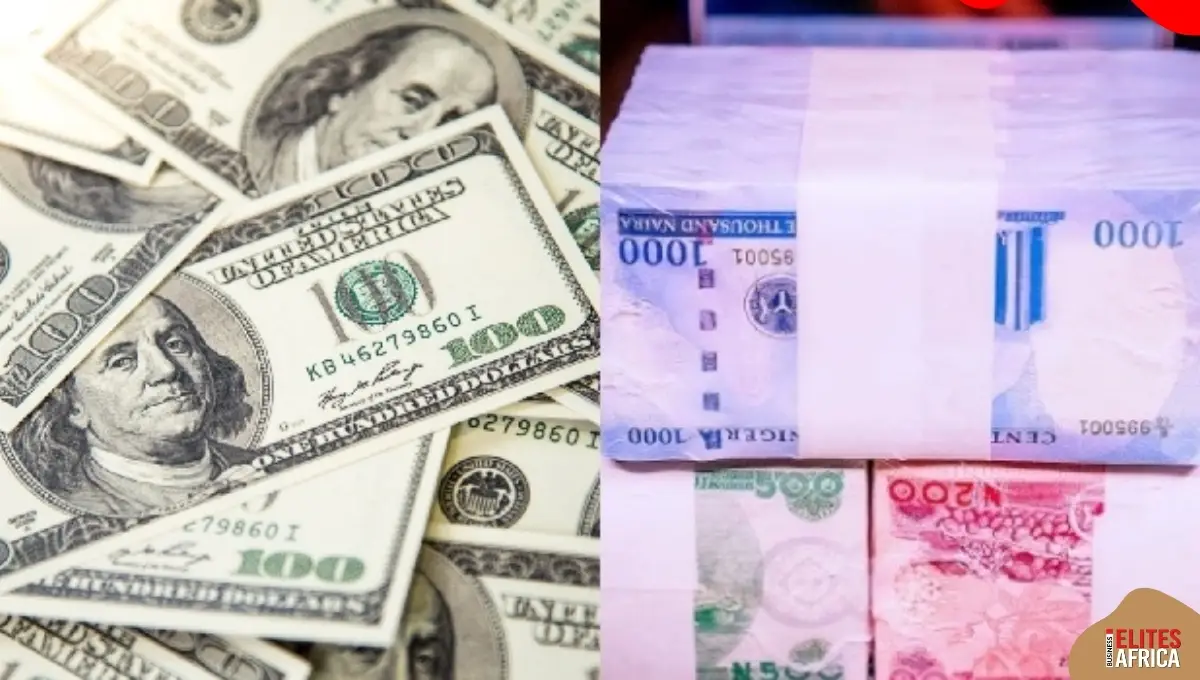
In the parallel market, the naira increased sharply, and that sudden move has triggered a familiar reaction, people who were sitting on dollars are now rushing to sell.
Not because they suddenly love the naira, but because speculators hate one thing more than losing money, missing the peak.
The new rate traders are quoting
Street traders reported the naira climbed to ₦1,345 per $1 on Thursday, February 19, improving from ₦1,370 per $1 on Wednesday, February 18. That’s a ₦25 swing in a day about 1.86% and it’s the kind of move that forces fast hands to reset.
This is also why the “everyone is selling dollars” narrative caught fire. When rates drop quickly in the black market, holders who bought high start dumping to protect whatever margin is left.
What happened at the official market
While the street market was celebrating, the official window didn’t mirror the exact same direction.
At the Nigerian Foreign Exchange Market (NFEM) window, the dollar was quoted at ₦1,341.35 per $1, a slight weakening from ₦1,338.11 the day before — a move of ₦3.24 (about 0.24%).
That difference matters less than the spread.
The real headline: the gap almost vanished
The biggest story here is convergence. With the parallel market around ₦1,345 and the official market around ₦1,341.35, the spread shrank to roughly ₦4 about 0.29%. That is a dramatic improvement from the ₦92 gap seen just a week earlier.
In practical terms, this is what traders and businesses want: fewer “two Nigerias” in FX pricing. A narrow spread reduces arbitrage incentives, cools panic demand, and makes it harder for rate manipulation to thrive.
Nigeria last saw full convergence on July 4, 2024, when both segments reportedly traded around ₦1,520/$.
Why speculators are dumping dollars now
Market participants tied the parallel-market rally to one key trigger: a sudden increase in dollar supply.
And that supply is coming from speculators who had been warehousing dollars waiting for a better exit. When policy signals change or when liquidity is about to improve those speculators rush to sell before the market reprices against them.
The turning point behind the scenes is the Central Bank’s move to reopen access to the official FX window for Bureau De Change (BDC) operators. If BDCs can source dollars through banks officially, it reduces street scarcity and street scarcity is what usually keeps the parallel rate elevated.
So the logic is simple: if retail dollar supply improves, the street rate weakens, and anyone holding dollars for profit needs to exit quickly.
External reserves are rising and that strengthens the CBN’s hand
Another support factor is reserves.mNigeria’s external reserves rose to $48.50 billion as of February 17, 2026, according to central bank data.
Higher reserves don’t automatically solve FX issues, but they improve confidence that the regulator can defend the currency, meet obligations, and manage supply shocks.
Confidence is currency. When confidence rises, hoarding reduces. When hoarding reduces, street pressure falls.
ABCON reacts: “gap has closed down”
ABCON’s leadership is clearly pleased with the direction of movement.
Aminu Gwadabe, president of the Association of Bureaux De Change Operators of Nigeria (ABCON), praised the performance and highlighted the closing gap between the official market and the parallel market, calling it a strong signal for the naira.
His main argument is policy-driven: once BDCs are allowed to buy dollars from banks, liquidity improves at the retail end, the exact segment where scarcity is usually worst.
ABCON’s South-West chairman, Taiwo Ebenezer, echoed the same point: the appreciation followed the announcement that BDCs would resume participation at the NFEM window under the central bank’s directive.
The catch: BDCs haven’t started buying yet
Here’s the part many people are overlooking. Even with the optimism, BDC operators reportedly have not commenced dollar purchases from commercial banks one week after the reopening announcement.
That tells you two things at once. First, the market is reacting to expectation, not just actual supply already flowing.
Second, execution details and banking processes still matter. Announcements move sentiment. Implementation moves cash.
What the CBN approved for BDCs
Under the new guideline, licensed BDCs can purchase FX from the NFEM through authorised dealer banks at prevailing market rates, subject to compliance requirements.
Banks must complete full KYC and due diligence checks for BDC clients. Once documentation is cleared, banks can sell FX in line with existing rules, with a cap of $150,000 per week per BDC.
That weekly cap is important. It signals controlled liquidity injection enough to support retail supply without turning the window into a free-for-all.


4 Things You Cannot Do in the UK on a Student Visa in 2026
The United Kingdom has made it clear that international students on a student visa must fo…

What CBN Is Changing in Anti-Money Laundering Rules for Banks
The Central Bank of Nigeria has introduced new baseline standards for automated anti-money laundering …


1 Comment