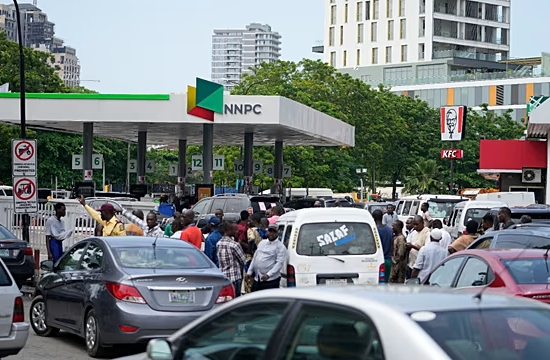
The Federal Government has clarified that the petrol discount currently observed at NNPC Retail Limited stations is not being funded by the national budget or the Federation Account. Instead, the government confirmed that the price reduction is being entirely absorbed by the profit margins of the retailer.
This clarification aims to address growing concerns regarding the fiscal impact of fuel pricing on Nigeria’s national debt and budgetary allocations. By confirming that the discount is a corporate decision by the retailer, the government is signalling that there is no immediate fiscal burden being placed on the taxpayer to subsidise these specific retail prices.
The announcement follows period of intense public scrutiny regarding how fuel prices are determined in the post-subsidy era. As the NNPC Group continues to navigate the transition towards full market-reflective pricing, the distinction between government-led subsidies and corporate-led price adjustments remains a critical point of interest for investors and consumers alike.
According to reports from Nairametrics, the move to absorb these costs through NNPC Retail’s margins suggests a strategic effort to provide some level of consumer relief without triggering the inflationary pressures associated with direct government spending. This approach allows the federal budget to remain focused on other critical infrastructure and social intervention programmes.
Implications for NNPC Retail Margins and Fiscal Policy
The decision to fund the discount through retail margins has significant implications for the financial performance of NNPC Retail Limited. As a commercial entity, the company’s profitability is directly tied to the spread between its procurement costs and the final pump price offered to the public.
By narrowing this spread to facilitate lower prices at the pump, NNPC Retail is effectively prioritising market stability and consumer affordability over immediate short-term profit maximisation. This move is particularly significant given the volatile nature of global crude oil prices and the high cost of refining and logistics within the Nigerian energy market.
From a public finance perspective, the distinction is vital. In previous years, petrol subsidies required massive, direct transfers from the Federation Account to fuel importers, often leading to significant budgetary deficits. By shifting the mechanism of price relief to a corporate margin absorption model, the government avoids the complexities of managing a formal subsidy regime through the national treasury.
Market analysts note that while this method protects the national budget, it places the financial risk squarely on the shoulders of the downstream operator. If global oil prices rise sharply or if domestic operational costs escalate, the compressed margins at NNPC Retail could impact the company’s ability to reinvest in infrastructure or maintain its extensive retail network.
The broader economic context involves Nigeria’s ongoing efforts to manage inflation, which has been heavily influenced by energy costs. While the current discount provides some breathing room for motorists and transport operators, it is seen as a localized relief rather than a systemic change to the nation’s energy pricing architecture.
The energy sector remains under close watch by regulators such as the Nigerian Midstream and Downstream Petroleum Regulatory Authority (NMDPRA), who oversee the pricing and distribution of petroleum products. Any long-term shift in how discounts are applied will likely require close monitoring to ensure that downstream operators remain commercially viable while meeting public service expectations.
As the government continues to refine its energy policy, the ability of state-linked entities to manage price volatility through internal financial mechanisms will be a key indicator of the country’s fiscal resilience. Investors in the Nigerian energy and manufacturing sectors will be watching to see if this margin-absorption model remains sustainable in the face of future price shocks.
The next phase of this development will involve assessing the quarterly financial performance of NNPC Retail to determine the extent of the impact on its bottom line and whether the current pricing strategy can be maintained without broader regulatory intervention.
Explore more Oil & Gas stories and analysis from Business Elites Africa.