
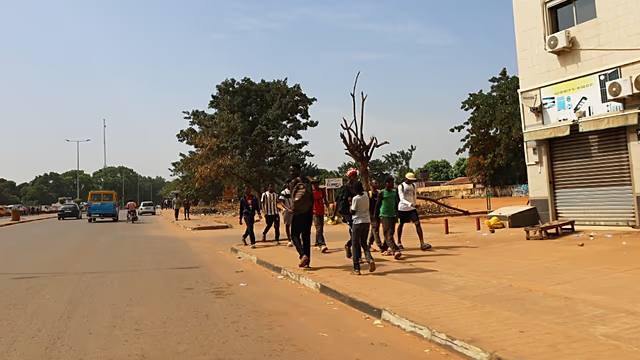
The military leadership in Guinea-Bissau has announced a two-year delay to the country’s transition to civilian rule, a decision that has sparked mixed reactions and heightened concerns regarding the nation’s economic stability and investment climate.
The announcement, made on 28 November 2026, represents a significant reversal of the timeline previously established by the junta. When military leaders seized power in November 2025, they had formally pledged to restore democratic governance and hold elections exactly one year after the takeover.
This new timeline effectively extends the military’s hold on power, pushing the expected return to constitutional order well into late 2028. The delay has met with a divided response from the local population, with some expressing resignation while others have voiced intense opposition to the extended period of military governance.
For the business community and international investors, the decision introduces a fresh layer of political risk. Guinea-Bissau has long struggled with institutional stability, and the uncertainty surrounding the legal and regulatory framework under a prolonged military administration may deter much-needed foreign direct investment.
Economic Risks and Regional Sanctions
The primary concern for economic analysts is the potential for renewed regional sanctions. The Economic Community of West African States (ECOWAS) has historically maintained a strict stance against unconstitutional changes of government, often imposing economic and travel sanctions on junta-led nations to enforce democratic transitions.
Such sanctions could have severe implications for Guinea-Bissau’s public finances and its ability to access international credit markets. Previous instances of regional intervention in West African politics have shown that trade restrictions and frozen state assets can cripple domestic commerce and limit the government’s capacity to fund essential infrastructure and social services.
The delay also threatens the stability of the country’s most critical export sector, cashew production. As a mainstay of the national economy, the cashew industry relies on predictable trade routes and stable export policies. Protracted political instability often leads to disrupted logistics and increased costs for traders, which could ultimately impact the livelihoods of thousands of small-scale farmers and the country’s overall trade balance.
Furthermore, the African Union has consistently emphasised the importance of adhering to democratic charters to maintain regional peace. A prolonged departure from the promised roadmap could prompt the AU to reassess its engagement with the Bissau-based administration, potentially affecting development aid and bilateral economic partnerships.
Local business leaders have noted that the lack of a clear, time-bound transition makes long-term planning nearly impossible. Without a stable civilian government to oversee contract enforcement and regulatory compliance, companies operating in the energy, telecommunications, and agriculture sectors may choose to delay capital expenditure in the country.
As the situation develops, the international community is expected to closely monitor the junta’s adherence to any newly proposed interim measures. The immediate focus will be on whether the military leadership will engage in dialogue with opposition leaders and civil society to mitigate the risks of civil unrest and economic isolation.
The next critical milestone will be the upcoming diplomatic sessions within ECOWAS, where member states are expected to deliberate on the implications of this delay for regional security and economic integration.
Explore more Politics stories and analysis from Business Elites Africa.


