
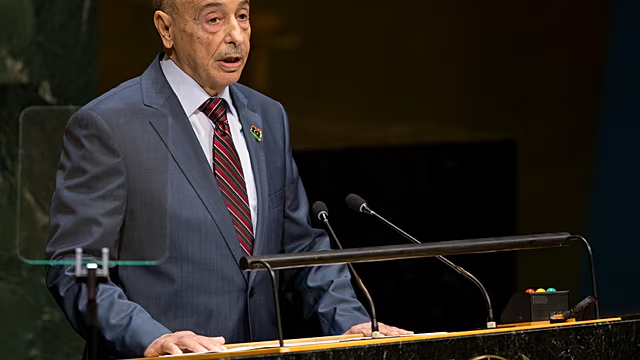
Libya’s eastern-based House of Representatives has voted to remove its long-standing speaker, Aguila Saleh, marking a significant shift in the political and economic management of the country’s oil-rich eastern territories. In a session held in Benghazi, lawmakers moved to replace Saleh with Al-Salhin Abdulnabi, a veteran legislator, following months of internal friction over the direction of the assembly and its relationship with Tripoli-based institutions.
The decision to oust Saleh, who has presided over the legislative body since its inception in 2014, comes at a critical juncture for Libya’s economy. The House of Representatives (HoR) holds legal authority over the regions containing the majority of the nation’s hydrocarbon infrastructure, including the vital Sirte Basin. Saleh has been a central figure in the long-running dispute between the eastern administration and the UN-recognised Government of National Unity (GNU) in Tripoli, often using his position to influence oil production and the distribution of state revenues.
According to reports from the session, the vote was prompted by growing discontent among members regarding Saleh’s handling of recent negotiations over the United Nations-led political process and the management of national finances. The move was supported by a significant majority of the members present, who argued that new leadership was required to break the legislative deadlock that has hindered economic reforms and budget approvals for over a year.
The appointment of Al-Salhin Abdulnabi is expected to bring a change in the HoR’s approach to fiscal policy. Abdulnabi has previously called for more transparent oversight of the National Oil Corporation (NOC) and has been critical of the way oil wealth is allocated across Libya’s three historical regions. His elevation to the speakership could signal either a period of renewed confrontation with the Tripoli government or a fresh opportunity for reconciliation, depending on how the new leadership engages with international mediators.
Impact on Libya’s Oil Production and Economic Governance
The removal of Saleh has immediate implications for the stability of Libya’s oil sector, which currently produces approximately 1.2 million barrels per day. The HoR has historically exercised significant influence over the oil ports in the east, and leadership changes within the parliament have previously served as a precursor to production shutdowns or blockades used as political leverage. Markets are watching closely to see if Abdulnabi will maintain the status quo or if the transition will lead to fresh disruptions in supply.
This leadership change follows a period of intense volatility regarding the Central Bank of Libya (CBL). Earlier this year, a dispute over the governorship of the bank led to a total shutdown of oil production in the east, which only resumed after a UN-brokered deal was reached between the HoR and the High Council of State. Saleh was a key signatory to that agreement, and his departure raises questions about the durability of the current fiscal arrangements between the eastern and western authorities.
Business leaders and international investors have expressed concern that a leadership vacuum or a fractured parliament in the east could delay the implementation of the 2025 national budget. The removal of the speaker occurs as Libya attempts to attract foreign direct investment into its energy and infrastructure sectors, which have suffered from a decade of underinvestment and conflict. Technical analysts suggest that without a unified legislative framework, major projects involving international oil companies may remain stalled.
The World Bank recently noted that Libya’s economic outlook remains “highly fragile” and dependent on the continuous flow of oil exports and the integrity of its financial institutions. The bank highlighted that political fragmentation continues to be the primary driver of economic instability, affecting everything from the exchange rate of the Libyan dinar to the availability of letters of credit for private sector importers. The latest data on Libya’s fiscal performance is available through the World Bank’s Libya update.
In his first remarks following the vote, Al-Salhin Abdulnabi stated that his primary objective would be to unify the legislative body and ensure that the House of Representatives fulfills its role in overseeing state expenditures. He emphasized the need for a legal framework that ensures oil revenues are used for national development rather than political patronage. However, he did not specify whether his leadership would seek a more collaborative relationship with the GNU in Tripoli or continue the policy of legislative independence.
International observers, including the United Nations Support Mission in Libya (UNSMIL), are expected to issue a formal response to the leadership change in the coming days. The focus will remain on whether this transition aids or complicates the process of holding national elections, which have been repeatedly postponed. For the business community, the immediate priority remains the security of the oil fields and the continued functionality of the banking system under the newly appointed parliamentary leadership.
Explore more News stories and analysis from Business Elites Africa.


