
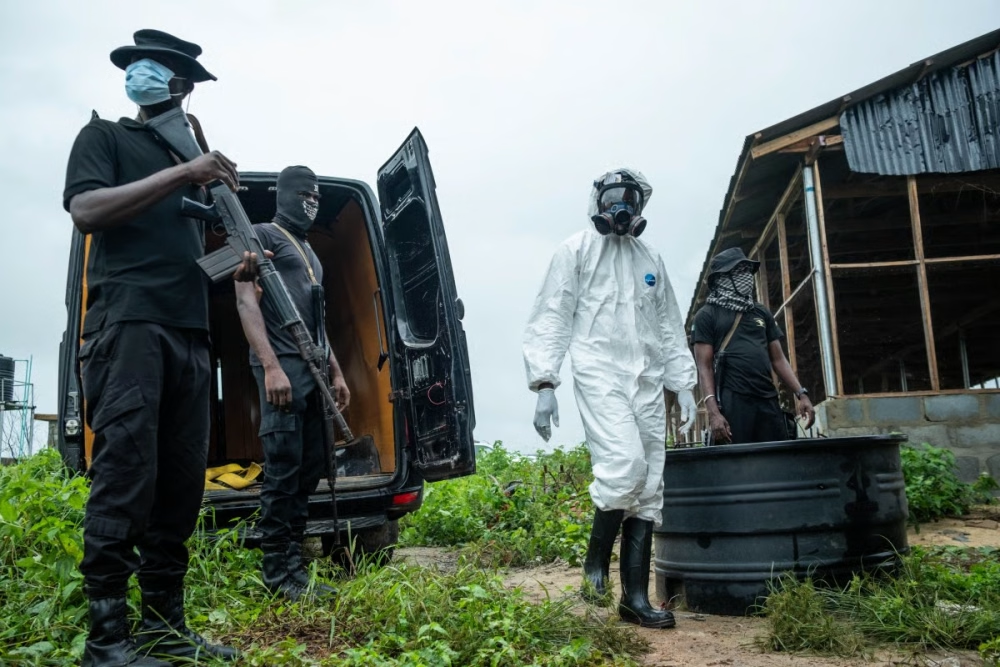
Mexican transnational criminal organisations have established a sophisticated industrial-scale manufacturing hub for crystal methamphetamine within South Africa, according to recent intelligence and law enforcement operations. By repurposing remote game farms and exploiting local corruption, these syndicates are transforming the country from a traditional transit point into a primary production centre for high-purity narcotics destined for lucrative global markets.
The shift represents a significant escalation in the complexity of organised crime in Southern Africa. Historically, South Africa has served as a gateway for heroin and cocaine moving between the East and West. However, the involvement of chemists from the Sinaloa and Jalisco New Generation cartels indicates a new operational model focused on the domestic synthesis of synthetic drugs using imported precursors.
The primary economic driver for this expansion is the staggering profit margin available in the Australian and East Asian markets. In South Africa, a kilogramme of crystal meth may fetch a few thousand dollars, but that same quantity can command prices exceeding $150,000 in Australia. This price arbitrage has made the logistical challenge of operating in the African bush a secondary concern for cartels seeking to maximise returns on investment.
The South African Police Service (SAPS) high-profile raid in Groblersdal, Limpopo, earlier this year provided the most concrete evidence of this trend. Police discovered a massive clandestine laboratory equipped with industrial-grade machinery and arrested several individuals, including two Mexican nationals described as “cooks” or chemical experts. The facility was capable of producing hundreds of millions of dollars worth of methamphetamine, highlighting the scale of the investment being made by foreign syndicates.
Illicit Trade Exploits South Africa’s Commercial Infrastructure
The choice of game farms as production sites is a strategic decision dictated by the unique geography and economy of the South African interior. These vast, privately owned properties offer the isolation required to mask the pungent chemical odours associated with meth cooking. Furthermore, many of these farms possess the necessary infrastructure—such as heavy-duty electricity connections and large sheds—originally intended for legitimate agricultural or tourism-based operations.
According to reports from the United Nations Office on Drugs and Crime (UNODC), the cartels rely on a steady supply of precursor chemicals, often diverted from legal industrial channels in Asia. These chemicals enter through major South African ports like Durban and Cape Town, frequently hidden within legitimate commercial shipments. The complexity of the country’s trade volumes makes it difficult for customs officials to intercept every illicit container, particularly when facilitated by local facilitators and corrupt officials.
For the South African business community, the infiltration of these syndicates poses a multifaceted risk. The game farming and luxury tourism sectors, which are vital for rural employment and foreign exchange, face reputational damage and increased security costs. There are also growing concerns regarding the laundering of drug proceeds through local real estate, livestock auctions, and front companies, which can distort local market prices and attract further criminal elements.
The involvement of Mexican cartels also introduces a higher level of violence and professionalised security into the local criminal landscape. Unlike smaller local gangs, these international organisations possess the resources to bribe high-ranking officials and employ advanced counter-surveillance techniques. This makes the task of dismantling their networks significantly more dangerous for the Directorate for Priority Crime Investigation, known as the Hawks.
International law enforcement agencies, including those from the United States and Australia, are increasingly collaborating with South African authorities to track the financial flows and shipping routes used by these groups. The recent reporting from The Africa Report suggests that the Sinaloa cartel has been scouting locations across several provinces, indicating that the Groblersdal lab may not be an isolated incident but rather part of a broader network.
The next phase of the government’s response is expected to focus on stricter regulation of precursor chemicals and enhanced monitoring of remote land sales. However, the effectiveness of these measures will depend on the state’s ability to address the systemic corruption that allows such large-scale operations to exist in plain sight. As South Africa struggles to exit the FATF grey list, the presence of international drug manufacturing syndicates adds a layer of urgency to the country’s efforts to reform its financial and security oversight mechanisms.
Explore more News stories and analysis from Business Elites Africa.


