
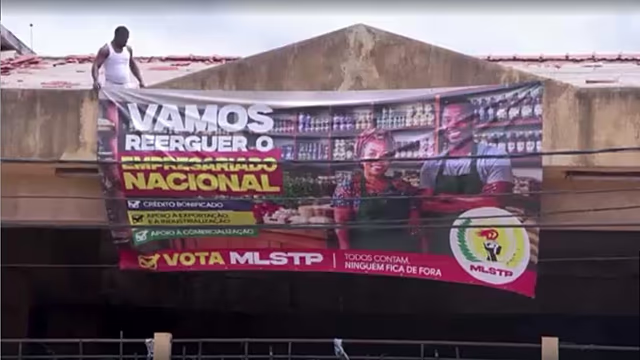
The President of São Tomé and Príncipe has reappointed the current Prime Minister following legislative elections that left the country’s political landscape fragmented and without a clear governing majority.
The decision comes after the Movement for the Liberation of São Tomé and Príncipe (MLSTP), which emerged as the winning party in the polls, failed to secure the additional parliamentary support required to form a new government.
According to reporting by Africanews, the political impasse was further complicated by the performance of Américo Ramos’ party, which secured a close second place in the elections but was unable to break the deadlock.
The reappointment ensures continuity in the executive branch, though it highlights a persistent struggle for stability within the island nation’s semi-presidential system.
Under the country’s constitutional framework, the President holds the authority to appoint the Prime Minister, typically based on the results of legislative elections. However, the requirement for the government to maintain the confidence of the National Assembly often leads to protracted negotiations when no single party holds an absolute majority.
The current deadlock reflects a broader trend of political volatility in São Tomé and Príncipe, where shifting alliances between small parties frequently disrupt the formation of durable administrations.
Political Instability Impacts Economic Planning
The inability of the MLSTP to consolidate power has immediate implications for the country’s public finance management and economic policy implementation. Political volatility in the capital, São Tomé, often delays the approval of national budgets and the rollout of critical infrastructure projects.
For a small island economy heavily dependent on cocoa exports and foreign aid, government stability is a primary driver of investor confidence. Frequent changes in leadership or the presence of caretaker governments can stall negotiations with international lenders and development partners.
Data from the World Bank indicates that the country remains vulnerable to external shocks, making a consistent economic strategy essential for long-term growth.
Institutional stability is particularly crucial as the government seeks to diversify its economy away from agriculture and expand its tourism sector. These sectors require long-term regulatory certainty to attract the foreign direct investment necessary for hotel development and transport infrastructure.
The International Monetary Fund (IMF) has previously emphasised the need for structural reforms in the country to improve public financial management and reduce debt vulnerabilities.
A fragmented parliament increases the risk of legislative paralysis, which can hamper the government’s ability to pass the very reforms required to secure further international financial support.
The reappointment of the Prime Minister serves as a temporary measure to prevent a total administrative vacuum, but it does not resolve the underlying lack of a parliamentary mandate for the current executive.
Political analysts suggest that the current administration will now face the challenging task of navigating a hostile or indifferent assembly to pass essential legislation.
Observers will be monitoring whether the MLSTP or other smaller factions attempt to forge new coalitions in the coming weeks to create a more sustainable governing majority.
The next critical step will be the formal convening of the newly elected National Assembly, where the government’s policy agenda will face its first major tests of viability.
Explore more News stories and analysis from Business Elites Africa.


