
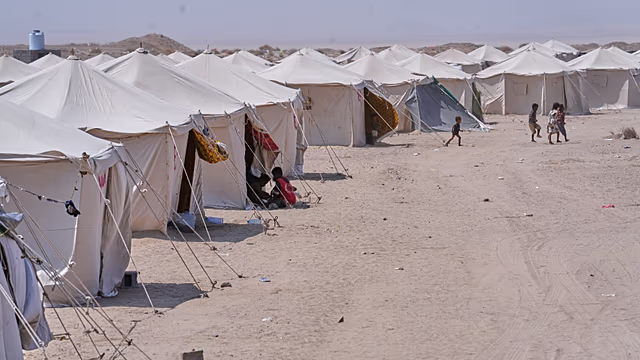
The United Nations has warned that more than 10,000 Yemeni refugees are expected to flee across the Red Sea to Djibouti in the coming months as renewed fighting escalates. This projected surge in displacement poses a significant challenge to the small East African nation’s economy and its critical role in regional maritime logistics.
According to the latest figures released by the United Nations High Commissioner for Refugees (UNHCR) and the International Organization for Migration (IOM), the displacement inside Yemen is also expected to swell, with over 230,000 people likely to be uprooted from their homes. The warning comes as hostilities in Yemen reach a new peak, threatening to destabilise an already fragile regional security environment.
Djibouti, a country of approximately one million people, serves as a vital strategic hub for international trade and military operations. The arrival of 10,000 additional refugees would represent a 1% increase in the country’s population within a few months, placing immense pressure on public services, food supplies, and health infrastructure. Government officials and international aid agencies are now bracing for the fiscal impact of this humanitarian development.
The UNHCR and its partners have indicated that the current funding for the regional refugee response is already stretched thin. A sudden influx of this magnitude will require an immediate reallocation of resources to manage reception centres and provide basic necessities. For Djibouti, which has historically maintained an open-door policy for those fleeing conflict in the Gulf of Aden, the economic burden of hospitality is becoming increasingly difficult to sustain without significant international intervention.
Economic implications for Djibouti’s port-led growth
The potential humanitarian crisis arrives at a sensitive time for Djibouti’s economy. The nation’s growth model is heavily dependent on its status as a premier logistics hub, particularly for landlocked Ethiopia. Any significant regional instability, including large-scale population movements across the Red Sea, risks complicating the security protocols at the Port of Djibouti and the Doraleh Multipurpose Port, which are central to the country’s Gross Domestic Product.
Disruption in the Red Sea corridor also has broader implications for international shipping. As the International Organization for Migration tracks movement patterns, there are concerns that the same routes used by refugees could become flashpoints for broader maritime insecurity. The Bab-el-Mandeb Strait, a narrow chokepoint between Yemen and Djibouti, carries an estimated 10% of global seaborne petroleum and trillions of dollars in annual trade.
The World Bank has previously noted that Djibouti remains vulnerable to external shocks, including regional conflicts and commodity price volatility. The fiscal cost of managing a refugee influx often falls on the host government before international aid arrives, potentially widening the national deficit. With debt sustainability already a concern for the Djiboutian government, the UN’s warning serves as a signal to international creditors and development partners about the rising risks in the Horn of Africa.
Previous influxes, such as those seen during the height of the Yemeni civil war in 2015, led to the establishment of the Markazi camp near Obock. However, integrated urban refugees often compete for low-skilled labour opportunities in the capital, Djibouti City. This demographic shift can influence local market dynamics, particularly in the informal economy where many small and medium-sized enterprises (SMEs) operate.
The UN’s projection of 230,000 internally displaced persons within Yemen also suggests that the root causes of the migration are not being addressed. For Djibouti’s business community, the instability across the water means continued uncertainty for cross-border trade and investment. Many Djiboutian traders have historically maintained links with Yemeni markets, and the closure of these commercial avenues has forced a pivot toward other regional partners.
Looking at the next steps, the UNHCR and IOM are expected to launch a revised regional appeal to solicit emergency funding from global donors. The focus will likely be on strengthening the capacity of the Djiboutian National Office for the Assistance of Refugees and Affected Persons (ONARS). The government of Djibouti has yet to issue a formal statement regarding new border measures, but it is expected to seek firm financial commitments from the international community before the projected surge reaches its peak.
For investors and businesses operating in the Horn of Africa, the development underscores the persistent geopolitical risks that can impact supply chains and national budgets. The ability of Djibouti to absorb this influx while maintaining its reputation as a stable trade gateway will be a critical test for the nation’s Vision 2035 development goals.
Explore more News stories and analysis from Business Elites Africa.


