
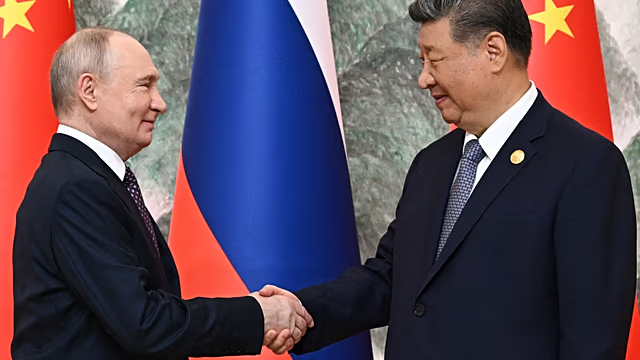
Chinese President Xi Jinping and Russian President Vladimir Putin convened on Wednesday in Shenzhen, China, on the sidelines of the Asia-Pacific Economic Cooperation (APEC) summit. The high-level bilateral meeting is widely seen as a precursor to potential trilateral discussions that would include US President Donald Trump, signalling a crucial period for global economic and geopolitical alignments with significant ramifications for African trade, investment, and development.

The APEC summit, a key forum for fostering economic growth, cooperation, trade, and investment across the Asia-Pacific region, provides a strategic backdrop for these discussions. For Africa, the outcomes of such meetings among the world’s most powerful economies – particularly regarding trade policies, investment frameworks, and geopolitical stability – directly influence commodity markets, infrastructure financing, and access to crucial development capital.
China remains Africa’s largest trading partner and a dominant force in infrastructure development across the continent, largely through its Belt and Road Initiative (BRI). Beijing’s engagement has seen billions of dollars flow into ports, railways, power plants, and digital networks, fundamentally reshaping African economies. Any shifts in China’s economic priorities or global trade strategies, potentially influenced by discussions with Russia and the US, could alter the pace and nature of these investments.
Russia, while having a smaller overall economic footprint than China, has steadily increased its strategic presence in Africa, focusing on resource extraction, energy projects, and security cooperation. Moscow’s expanding diplomatic and economic ties, often bypassing traditional Western financial systems, offer alternative partnerships for African nations. The dialogue between Xi and Putin is expected to reinforce existing collaborations and potentially forge new economic fronts that could further diversify Africa’s international engagements.
Potential Shifts in Global Economic Dynamics and African Impact
The anticipated involvement of US President Donald Trump in trilateral talks introduces another layer of complexity. During his previous administration, Trump pursued a protectionist trade agenda, imposing tariffs on Chinese goods and renegotiating trade agreements. A return to such policies, or the establishment of new trade blocs and alliances, could lead to significant global trade disruptions, impacting supply chains and commodity prices that are vital for African economies.
African nations, many of whom are heavily reliant on exporting raw materials and importing manufactured goods, are particularly vulnerable to volatility in global markets. For instance, fluctuations in oil prices, metal prices, or agricultural commodity values driven by major power trade disputes could have immediate and severe effects on national revenues and economic stability across the continent. Decisions made at the APEC summit, especially concerning global trade rules and investment flows, will therefore be closely watched by African policymakers.
Moreover, the technological rivalry between the US and China, particularly concerning 5G infrastructure and artificial intelligence, also holds implications for Africa’s digital transformation. African countries are keen to leverage global technological advancements, and the choices made by these economic giants could determine the accessibility, cost, and security standards of future digital infrastructure on the continent.
Analysts suggest that these high-level meetings could lead to either a recalibration of global economic cooperation or a deepening of existing divisions. For African businesses and governments, understanding these shifts will be critical for navigating future trade agreements, attracting foreign direct investment, and ensuring economic resilience. The continent’s leaders will need to strategically position themselves to capitalise on new opportunities while mitigating potential risks arising from the evolving global economic order.
The discussions at APEC are expected to set the tone for multilateral and bilateral engagements in the coming months, with their ripple effects likely to shape economic policies, trade routes, and investment landscapes well into 2027 and beyond. Key areas of focus for African stakeholders include maintaining market access, diversifying export bases, and securing sustainable financing for infrastructure projects amidst these changing global dynamics.
Explore more News stories and analysis from Business Elites Africa.


