
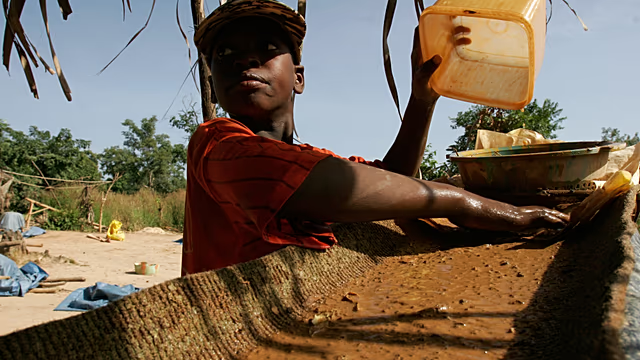
Burkina Faso is coordinating the repatriation and economic reintegration of more than 37,000 gold miners following their mass expulsion from Guinea.
The return process, which began on 6 November, has seen thousands of nationals arrive in Bobo-Dioulasso, where authorities are attempting to manage the sudden influx of workers and their families.
Among the returnees are approximately 8,000 children and more than 1,000 citizens of other nationalities, according to reports from Africanews. The Burkinabe government has vowed to provide necessary support to help these individuals transition back into the domestic economy.
The expulsion follows a tightening of mining regulations in Guinea, which has increasingly targeted foreign artisanal miners. This move is part of a broader effort by Conakry to increase state control over its mineral wealth and prioritise the “Guineanisation” of the workforce within its extractive sectors.
Artisanal and small-scale mining (ASM) represents a significant source of livelihood for thousands of young men in the Sahel region, who often migrate across borders in search of high-yield gold deposits. However, this informal sector is frequently subject to sudden regulatory shifts and security crackdowns.
Economic Impact of Guinea’s Mining Restrictions
The sudden loss of income for 37,000 people creates a significant socio-economic challenge for Burkina Faso. Most of the returning miners operated in the informal economy, meaning they lack formal employment contracts or social security buffers to fall back on after their expulsion.
The concentration of returnees in Bobo-Dioulasso puts immediate pressure on local infrastructure and social services. Authorities are now faced with the task of converting these unskilled or semi-skilled labourers into productive participants in the domestic market, whether through vocational training or the formalisation of domestic mining activities.
Burkina Faso is already one of the most prominent gold producers in West Africa. The World Bank has frequently highlighted how artisanal mining serves as a critical poverty-reduction tool in the region, provided it is properly regulated to avoid environmental degradation and human rights abuses.
The reintegration process will likely require government investment in micro-credit schemes and land access to prevent the displaced miners from falling into extreme poverty or becoming susceptible to recruitment by non-state armed groups, a persistent security risk in the region.
The mass movement of labour also reflects the volatile nature of cross-border trade and labour agreements in West Africa. While the region has protocols for the free movement of people, the extractive sector remains a highly protected area of national sovereignty for most member states.
Burkinabe officials are expected to outline a more detailed framework for the financial and technical support available to the returnees in the coming weeks, including potential partnerships with local cooperatives to absorb the new labour force into legal mining concessions.
The government’s ability to successfully reintegrate these workers will depend on the availability of funding and the capacity of the Ministry of Mines to expand legal artisanal zones within the country.
Explore more Business stories and analysis from Business Elites Africa.


