
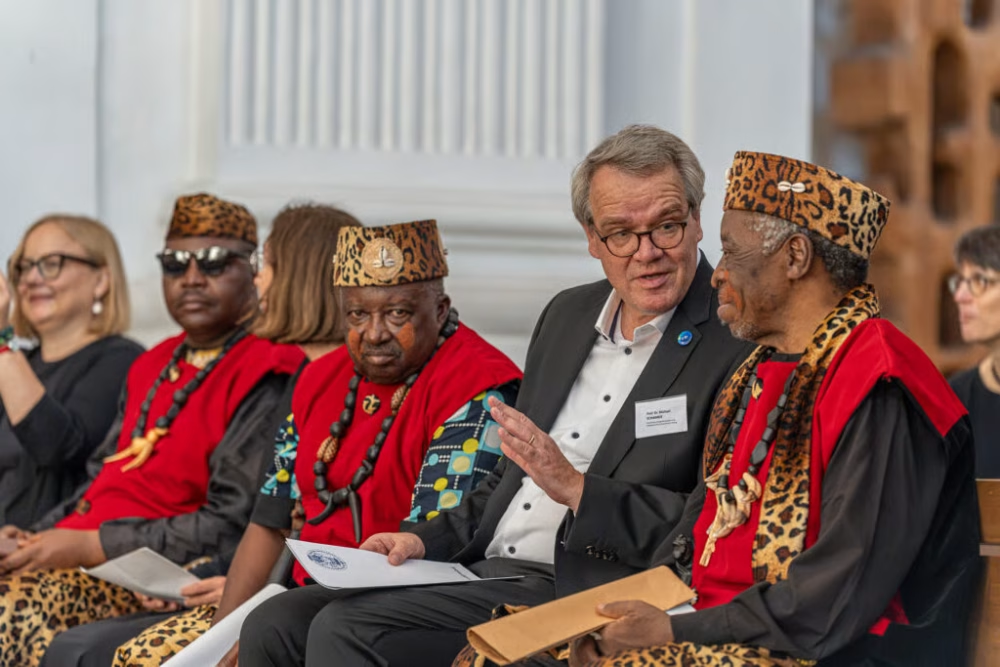
Germany has repatriated the remains of six traditional chiefs to Cameroon, marking a significant milestone in diplomatic efforts to address colonial-era legacies and reshape the cultural cooperation framework between the two nations.
The return of the six skulls, which had been held in German collections for over a century, follows years of advocacy by Cameroonian traditional authorities and civil society groups. The remains were formally handed over following an elaborate ceremony in Berlin, attended by a delegation of traditional rulers from Cameroon’s Northwest and West regions, alongside German government officials. This development is seen as a crucial step in the broader movement for the restitution of African cultural and human heritage plundered during the colonial period.
The repatriation was facilitated by the Prussian Cultural Heritage Foundation (SPK), which has been conducting extensive provenance research into its colonial-era holdings. The foundation confirmed that the remains were taken during German colonial rule in Cameroon, which lasted from 1884 to 1916. While the return of these six sets of remains is a high-profile success, archival records suggest that approximately 600 sets of human remains from Cameroon still reside within various European institutions, primarily in Germany.
For Cameroon, the return of these remains is not merely a symbolic victory but a matter of national and spiritual importance. Traditional leaders have long argued that the absence of these ancestral remains has disrupted the cultural and social cohesion of their communities. The Cameroonian government has increasingly integrated the recovery of such heritage into its broader foreign policy objectives, viewing cultural restitution as a component of restorative justice and a catalyst for developing its domestic creative economy.
Strengthening Bilateral Ties Through Cultural Restitution
The repatriation process comes at a time when Germany is actively seeking to recalibrate its relations with African partners through “cultural diplomacy.” By addressing the sensitive issue of colonial-era remains and artifacts, Berlin aims to build trust and strengthen bilateral ties that extend into economic and developmental cooperation. Germany remains one of Cameroon’s most significant development partners, with a relationship largely focused on environmental protection, rural development, and governance.
Economic analysts suggest that the resolution of these historical grievances can pave the way for more robust bilateral agreements. As Cameroon looks to modernise its infrastructure and attract European investment, a stable and respectful diplomatic relationship with Germany provides a necessary foundation. Furthermore, the restitution movement is driving investment into Cameroon’s own cultural infrastructure. The government is currently exploring the development of new museum facilities and heritage sites capable of housing returned artifacts and remains, which could eventually bolster the country’s tourism sector.
The German Foreign Office has expressed its commitment to continuing the provenance research necessary to identify further remains. This process is complex, involving detailed genetic testing and historical cross-referencing to ensure that remains are returned to their correct communities of origin. The German government has allocated specific funding to support these efforts, acknowledging that the burden of proof should not fall solely on the African nations seeking the return of their heritage.
The momentum in Cameroon mirrors similar developments across the continent, most notably the return of the Benin Bronzes to Nigeria. These actions are forcing a global rethink of museum ethics and the ownership of cultural property. For business leaders and policymakers in Africa, the restitution trend represents a shift in the power dynamics of international relations, where cultural equity is becoming as significant as economic trade in defining the terms of partnership.
Moving forward, the Cameroonian Ministry of Arts and Culture is expected to lead negotiations for the return of the remaining sets of remains. This will likely involve further high-level diplomatic missions and the establishment of a formal framework for restitution. As these processes unfold, they will continue to serve as a barometer for the evolving relationship between Europe and Africa in the 21st century, moving from a history of extraction toward a future defined by mutual respect and cooperation.
Explore more News stories and analysis from Business Elites Africa.


