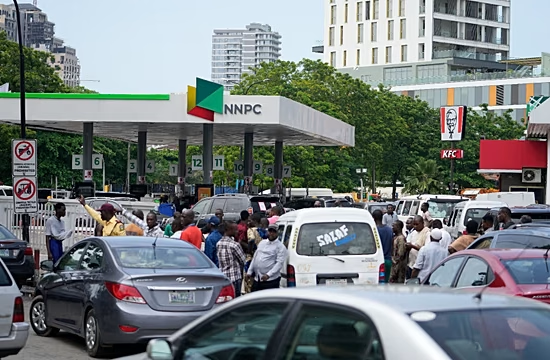
Gbenga Olawepo-Hashim, the presidential candidate of the Accord Party, has advocated for a sustainable price ceiling of N605 per litre for petrol to balance economic viability with consumer affordability.
The proposal comes amid ongoing volatility in the domestic energy market following the removal of the fuel subsidy, which has seen prices fluctuate significantly based on foreign exchange rates and supply chain dynamics.
Hashim argued that while full deregulation is a policy objective for many, the current price trajectory places an unsustainable burden on the average Nigerian citizen and small businesses. He suggested that N605 represents a starting point for a pricing model that avoids the massive fiscal drain of a full subsidy while remaining within the reach of the populace.
The current pricing regime, overseen by the Nigerian Midstream and Downstream Petroleum Regulatory Authority (NMDPRA), allows for market-driven pricing. This shift has led to petrol prices frequently exceeding N800 or N1,000 per litre in various parts of the country, depending on the retail outlet and region.
For many businesses, particularly in the transport and logistics sectors, the cost of fuel remains the single largest operational expense. The surge in prices has triggered cost-push inflation, where the increased cost of transporting goods leads to higher retail prices for food and essential commodities.
Hashim’s proposal suggests that a managed price ceiling could provide a predictable environment for SMEs to plan their operations, thereby slowing the rate of inflation across other sectors of the economy.
Local Refining and the Path to Price Stability
The debate over sustainable pricing is closely linked to the operational capacity of domestic refineries. For decades, Nigeria has relied heavily on the import of refined petroleum products, leaving the pump price vulnerable to the volatility of the Naira against the US Dollar.
The emergence of the Dangote Refinery was expected to significantly alter this dynamic by reducing the reliance on imports and lowering the costs associated with international shipping and freight. However, the transition to locally refined petrol has been marked by negotiations over pricing and the currency of payment.
The NNPC Limited, which remains the primary coordinator of fuel imports and distribution, continues to manage the delicate balance between maintaining supply security and managing the financial implications of the current exchange rate.
Market analysts note that for a price like N605 to be truly sustainable without government intervention, the cost of production and distribution must drop. This requires not only full local refining capacity but also a more stable exchange rate and the elimination of inefficiencies in the downstream distribution chain.
The World Bank has previously highlighted that while the removal of fuel subsidies is a necessary step for fiscal health, the lack of a robust social safety net has amplified the shock for the poor and vulnerable.
Hashim’s proposed ceiling essentially calls for a hybrid approach—one that acknowledges the necessity of moving away from the old subsidy regime but rejects the total abandonment of the consumer to unrestricted market forces during a period of extreme currency devaluation.
The impact of such a policy would be most immediate in the transportation sector. A reduction in petrol prices toward the N600 mark would likely lead to a downward adjustment in interstate and intracity transport fares, providing immediate relief to millions of daily commuters.
However, implementing a price cap in a deregulated market would require either a targeted subsidy or a mandatory price agreement with marketers and refineries, both of which present significant regulatory and financial challenges for the current administration.
As the government continues to navigate its fiscal consolidation plan, the tension between market-led pricing and social stability remains a central point of political and economic contention. The next critical marker for price stability will be the full integration of local refining volumes into the national distribution network and the resulting effect on pump prices.
Explore more Oil & Gas stories and analysis from Business Elites Africa.