
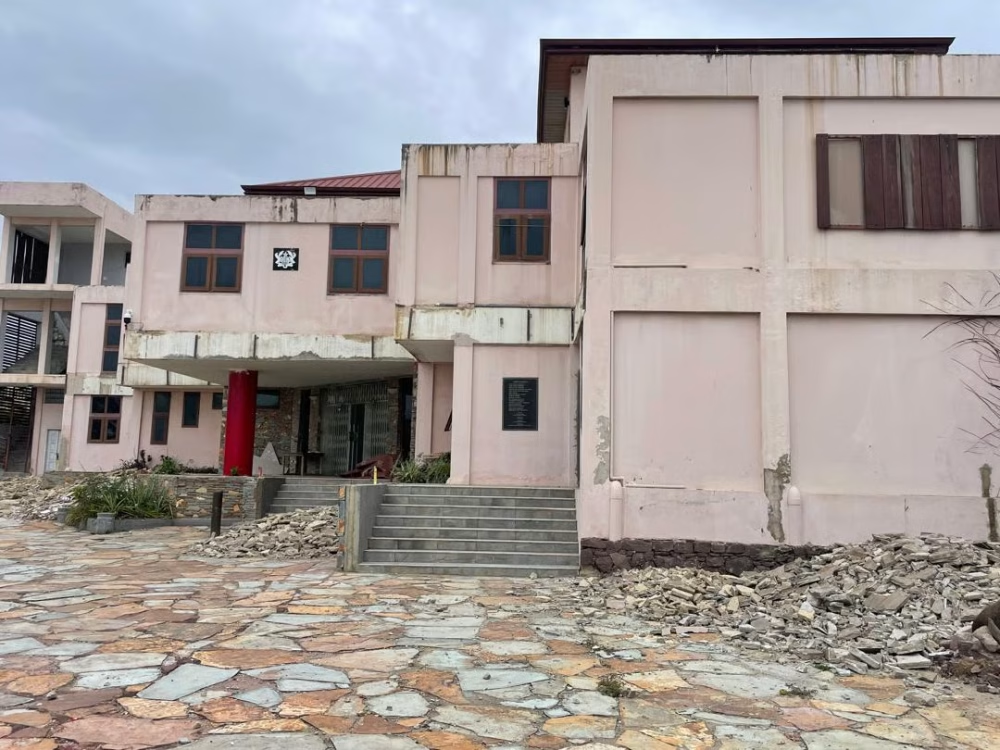
Ghana’s first presidential library has remained closed and decayed for a decade following a protracted governance dispute over the management of the facility.
The building, intended to house the archives and legacy of former President John Agyekum Kufuor, has become a symbol of administrative paralysis. Located in Cape Coast, opposite one of the continent’s most visited slave trade monuments, the facility was designed to serve as a research centre and a tourist attraction.
Reporting from The Africa Report indicates that the structure has spent ten years locked, with the interior suffering from severe decay and structural deterioration.
The impasse stems from a battle between the state and the foundation established to oversee the library’s operations. While the government provided the primary infrastructure, disagreements over the level of state control versus the independence of the presidential foundation have prevented the library from officially opening its doors to the public.
This deadlock has resulted in a wasted investment of public funds and private contributions. The facility was meant to integrate into the broader tourism circuit of the Central Region, providing an intellectual counterpart to the historic Cape Coast Castle.
Observers note that the lack of a clear operational framework has allowed the building to fall prey to the elements. Moisture and lack of ventilation have led to mold growth and the degradation of the building’s finishing, necessitating expensive renovations before it can be safely occupied.
Public Asset Mismanagement and Economic Loss
The decay of the presidential library reflects a broader challenge in Ghana regarding the management of public assets and “white elephant” projects. The inability to resolve a governance dispute over a completed building highlights a gap in the state’s capacity to transition infrastructure from construction to operationality.
From an economic perspective, the closure represents a significant opportunity cost. Cape Coast is a primary hub for heritage tourism in West Africa. A functional presidential library would have attracted historians, diplomats, and students, potentially increasing hotel occupancy and local business revenue in the surrounding area.
The situation mirrors other instances across the region where state-funded monuments or institutional buildings remain unused due to legal disputes or lack of funding for recurring operational costs. In such cases, the initial capital expenditure is lost, and the asset becomes a liability requiring further state spending for restoration.
The Ghana government has faced increasing scrutiny over public expenditure and debt management in recent years. The spectacle of a decaying state asset in a high-visibility tourist zone provides a tangible example of the inefficiencies that critics argue contribute to fiscal instability.
Local authorities in Cape Coast have expressed frustration that the facility remains a dead zone in a region otherwise primed for cultural and educational tourism. The proximity to the slave trade monuments makes the library a logical extension of the city’s historical narrative, yet it remains a locked shell.
Resolving the crisis will require a formal agreement on the library’s governance structure, likely involving a hybrid model of state ownership and foundation management. Until such a settlement is reached, the facility continues to deteriorate, increasing the eventual cost of salvage.
The current status of the library remains unresolved, with no confirmed date for a reopening or a new management announcement from the Ministry of Tourism, Arts and Culture.
Explore more News stories and analysis from Business Elites Africa.


