
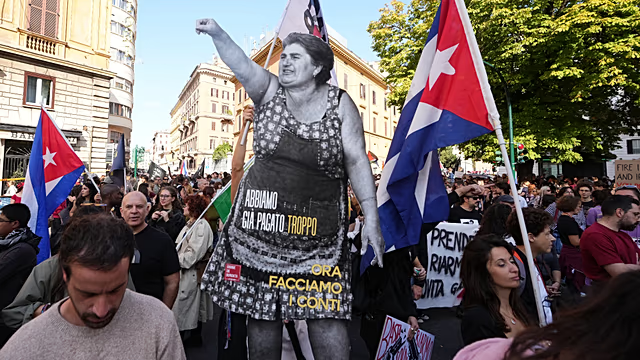
Thousands of Italian citizens took to the streets of Rome on Friday, October 30, 2026, participating in a general strike called by the left-wing Unione Sindacale di Base (USB) trade union. The widespread protest highlighted deep-seated public discontent over persistently rising living costs and the government’s budgetary priorities, particularly its expenditure on defence.
The demonstration, which saw participants march through the capital’s central thoroughfares, underscored the mounting pressure on Prime Minister Giorgia Meloni’s administration to address the economic anxieties gripping the nation. Protesters voiced frustration over the erosion of purchasing power, stagnant wages, and the disproportionate impact of inflation on lower and middle-income households.
Italy, like much of Europe, has grappled with elevated inflation rates over the past two years, largely driven by surging energy prices and global supply chain disruptions. While inflation has shown signs of moderation, core inflation remains a concern, keeping household budgets tight and fuelling demands for stronger government intervention. The USB union specifically criticised the government’s proposed budget, arguing it fails to adequately protect vulnerable populations and instead prioritises military spending over essential social services and economic relief measures.
Union leaders, addressing the crowds, demanded immediate action to cap prices, raise minimum wages, and redirect public funds towards improving healthcare, education, and public transport infrastructure. They highlighted the stark contrast between the financial struggles of ordinary Italians and the significant allocations towards defence, particularly in the context of broader geopolitical developments.
Economic Implications for Italy and Global Markets
The general strike’s impact was felt across various sectors, including public transport, education, and healthcare, though adherence varied by region and industry. While immediate economic disruption was contained, the protest signifies a growing challenge for the Italian government in balancing fiscal prudence with social demands. Persistent labour unrest and widespread public dissatisfaction can deter foreign investment, impact consumer confidence, and potentially slow down economic recovery efforts.
Italy, as a key member of the Eurozone and the G7, holds significant economic weight. Instability within its borders can have ripple effects across European markets, potentially influencing the Euro’s value and global investor sentiment. For African economies, such developments in major European partners can have material consequences. Italy is a significant trade partner and investor in several African nations, particularly in North Africa and the Horn of Africa. Prolonged economic uncertainty or policy shifts in Rome could affect Italian foreign direct investment into Africa, alter demand for African exports, and influence broader European Union economic policies impacting development aid or trade agreements.
Analysts suggest that the Meloni government faces a delicate balancing act. While committed to fiscal discipline and NATO defence targets, it must also respond to the domestic socio-economic pressures that triggered Friday’s protests. The coming months will likely see intensified negotiations between unions and the government, with potential for further industrial action if demands are not met. The outcome of these negotiations will not only shape Italy’s domestic economic trajectory but could also serve as a barometer for public tolerance of austerity measures and defence spending priorities across other European nations facing similar economic headwinds.
The USB has indicated it is prepared to escalate its actions if the government does not engage meaningfully with its proposals for a more equitable distribution of wealth and a re-evaluation of national spending priorities. The situation underscores a broader European challenge in navigating post-pandemic economic recovery amidst geopolitical tensions and persistent inflationary pressures, with potential for global economic ramifications that extend to emerging markets in Africa.
Explore more News stories and analysis from Business Elites Africa.


