
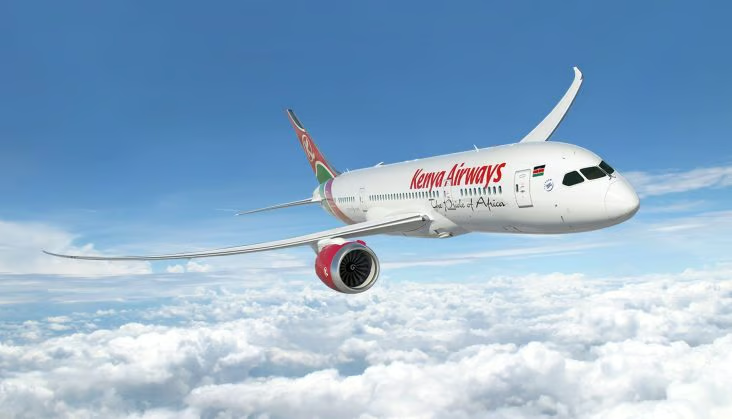
Kenya Airways is considering securing a new foreign-backed loan to restructure its balance sheet as part of a renewed effort to attract strategic investors.
The proposed financing aims to stabilise the national carrier’s precarious financial position and make it a more viable prospect for equity partners. However, the move comes at a time when the airline’s losses are widening, increasing the risk that the Kenyan government will face further liabilities.
According to reporting by The Africa Report, the plan is designed to clear the path for investors who have previously been deterred by the airline’s bloated debt profile and operational inefficiencies.
The search for a strategic partner has been a long-term goal for the Kenyan state, which remains the majority shareholder. The government believes that a private partner with deep pockets and technical expertise is the only sustainable way to save the carrier from systemic failure.
The airline has struggled for years with high operating costs, intense competition from regional rivals such as Ethiopian Airlines, and a complex debt structure that has hampered its ability to grow or modernise its fleet.
Past attempts to find a strategic investor were stalled by the sheer volume of the airline’s liabilities. Potential partners typically require a leaner balance sheet before committing significant equity, leading the government to consider debt restructuring or fresh loans to bridge the gap.
Government Liability and Debt Sustainability
The proposal to take on more foreign debt raises significant concerns regarding the National Treasury of Kenya. Because Kenya Airways is a state-backed entity, new foreign loans are often guaranteed by the government, effectively shifting the risk from the corporate entity to the Kenyan taxpayer.
This occurs against a backdrop of broader fiscal pressure within Kenya, where the government is already managing a heavy sovereign debt burden. Adding more contingent liabilities for a loss-making airline could further strain the national budget and affect the country’s overall credit rating.
Critics argue that borrowing more to attract an investor is a high-risk strategy. If the search for a strategic partner fails again, the government will be left with a larger debt mountain and an airline that continues to bleed cash.
Financial analysts note that the airline’s current trajectory suggests that loan-based restructuring may only provide a temporary reprieve unless accompanied by drastic operational reforms. These reforms would likely include fleet right-sizing, route optimisation, and a reduction in overhead costs.
The airline has previously undergone several “turnaround” plans, yet consistent profitability has remained elusive. The volatility of jet fuel prices and fluctuations in the Kenyan shilling have further complicated the carrier’s ability to service foreign-denominated debt.
The current strategy assumes that a fresh injection of liquidity will allow the airline to maintain operational capacity and improve its service offering, thereby increasing its valuation and attractiveness to external investors.
The Kenyan government is expected to weigh the immediate need for airline liquidity against the long-term risks to public finance. A decision on the loan will likely depend on the terms offered by foreign lenders and the level of commitment from potential strategic partners.
The next phase of this process will involve detailed negotiations with foreign financial institutions to determine the cost of the debt and the specific conditions under which the loan would be granted.
The outcome of these negotiations will determine whether Kenya Airways can successfully pivot toward a public-private partnership or if the state will be forced to provide another direct bailout to prevent the carrier’s collapse.
Explore more Companies stories and analysis from Business Elites Africa.


