
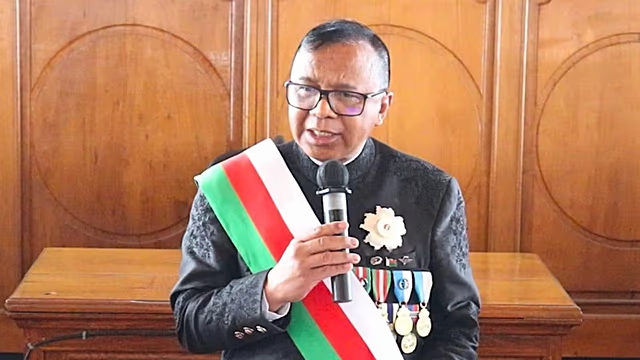
Richard Ravalomanana, the former President of the Madagascar Senate, has been sentenced to 10 years of hard labour following a conviction for complicity in murder.
The sentencing, delivered on Tuesday, stems from the defendant’s alleged role in a violent crackdown on youth-led protests that occurred across the country last year.
The court found that the former legislative leader played a complicit role in the events that led to multiple deaths during the state’s response to civil unrest. This ruling marks one of the most significant judicial actions against a high-ranking former official in Madagascar’s recent history.
The protests in question were driven primarily by a wave of youth dissatisfaction over economic stagnation and governance issues. Reports from the period indicate that the demonstrations were met with escalating force by security apparatuses, resulting in casualties that sparked an international outcry.
Legal proceedings focused on the chain of command and the specific instructions issued during the crackdown. The prosecution argued that Ravalomanana’s influence and actions contributed to the lethal nature of the security response, leading to the murder charges.
The imposition of hard labour as part of the sentence reflects the severity with which the judiciary is treating the breach of public trust and the loss of life. The ruling has sent shockwaves through the Malagasy political establishment, where the Ravalomanana family has historically held immense influence.
Political Stability and Judicial Precedent
The conviction occurs amid a period of heightened political sensitivity in Madagascar. The Ravalomanana name is deeply entwined with the country’s power struggles, most notably through the legacy of former President Marc Ravalomanana, the brother of the convicted former Senate president.
Observers of the region suggest that the sentencing may be viewed through two different lenses. Supporters of the judiciary argue it is a necessary step toward accountability and the rule of law, ensuring that no official is above the law regardless of their political standing.
Conversely, critics and opposition figures have raised concerns that the trial may be politically motivated. They point to a pattern of judicial pressure on individuals linked to former administrations as a means of consolidating current power structures.
The situation in Madagascar has long been monitored by international bodies. Amnesty International has previously documented concerns regarding the restriction of peaceful assembly and the use of excessive force by security forces during periods of civil unrest in the country.
Similarly, Human Rights Watch has highlighted the need for independent investigations into state-led violence to prevent impunity for those in leadership positions. The current verdict is a direct response to these types of failures in accountability.
The socio-economic drivers of the 2025 protests remain a point of contention. High youth unemployment and inflation had created a volatile environment, making the youth-led movements particularly potent and, consequently, a primary target for state suppression.
As reported by Africanews, the legal battle has highlighted the fragility of the peace between different political factions in the capital, Antananarivo.
The legal team for Richard Ravalomanana is expected to challenge the verdict. The defense has already hinted at filing an appeal, citing procedural irregularities and a lack of direct evidence linking the former Senate president to the specific acts of murder.
The next phase of the legal process will likely involve a review by the higher courts, which will determine if the evidence supports the complicity charge. This appeal process is expected to take several months, during which the political atmosphere in Madagascar is likely to remain tense.
The final outcome of the appeal will be critical in determining whether this sentence stands as a genuine landmark for justice or a catalyst for further political division within the nation.
Explore more Politics stories and analysis from Business Elites Africa.


