
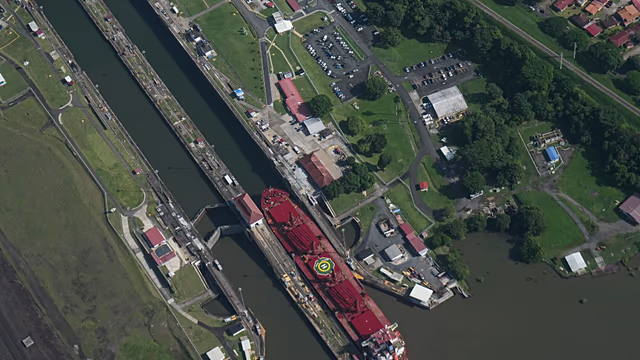
The Panama Canal Authority has announced a reduction in daily ship transits starting in September, citing an unusually early dry season and depleted rainfall levels linked to the El Niño climate pattern.
The decision comes as water levels in Gatun Lake, the primary freshwater source for the canal’s lock systems, have dropped below critical thresholds. Because the canal relies on gravity-fed freshwater to move ships between the Atlantic and Pacific Oceans, low water levels directly limit the number of vessels that can safely navigate the waterway.
The Panama Canal Authority (ACP) manages the flow of roughly 5% of global maritime trade. Any restriction in transit capacity creates an immediate ripple effect across international shipping lanes, forcing logistics companies to choose between longer wait times or more expensive alternative routes.
El Niño, a warming of surface waters in the eastern Pacific Ocean, typically disrupts global weather patterns. In Central America, this often manifests as severe drought. The ACP noted that the current dry season arrived earlier than expected, leaving the reservoir system insufficient to support full operational capacity during the September peak.
Shipping operators are already facing increased costs as they compete for limited transit slots. In previous periods of drought, some companies have paid millions of dollars in auctions to skip the queue, a practice that increases the overall cost of transporting goods.
Global Logistics Costs and Trade Disruptions
The reduction in transits is expected to increase freight rates and extend delivery timelines for commodities moving between Asia and the US East Coast, as well as shipments heading toward Europe and Africa. When the Panama Canal reaches capacity limits, vessels often reroute via the Suez Canal or the longer journey around the Cape of Good Hope.
For African markets, these disruptions are felt primarily through the volatility of global shipping indices. Higher operational costs for major carriers typically lead to surcharges on all routes, including those serving West African ports. Furthermore, the rerouting of grain and energy shipments can shift global supply dynamics, affecting the pricing of imported agricultural products.
According to data from the National Oceanic and Atmospheric Administration (NOAA), the intensity of El Niño events has become more unpredictable, making long-term infrastructure planning more difficult for the ACP.
This is not the first time the canal has faced such a crisis. Throughout 2023 and 2024, the waterway experienced similar restrictions that forced a significant portion of global trade to seek alternatives. The recurrence suggests that climate-driven water scarcity is becoming a structural risk rather than a temporary anomaly.
To mitigate these risks, the Panamanian government has explored various water-management projects, including the construction of new reservoirs and the implementation of water-saving basins. However, these infrastructure projects require significant capital investment and several years to complete.
Industry analysts suggest that the current restrictions will likely persist until the regional rainy season provides sufficient replenishment to Gatun Lake. For now, shipping companies are being advised to optimize cargo loads to reduce the draft of their vessels, allowing them to pass through the locks even with lower water levels.
The ACP is expected to provide weekly updates on transit slots throughout September, with the potential for further reductions if rainfall remains below historical averages. Shipping firms are currently monitoring global maritime alerts to adjust their schedules and avoid prolonged idling in the canal’s anchorage areas.
Explore more Business stories and analysis from Business Elites Africa.


