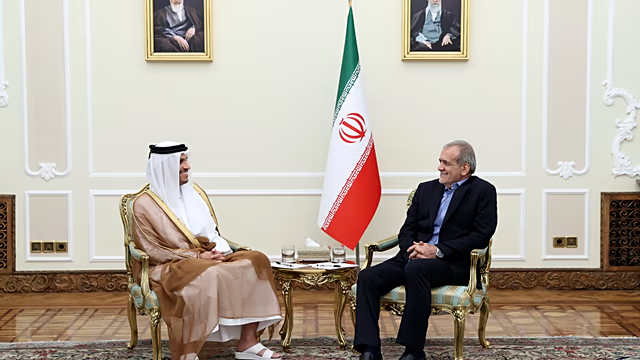
Qatar’s Foreign Minister has arrived in Tehran to lead diplomatic efforts to de-escalate tensions between Iran and the United States. The visit follows reports of a projectile attack on an oil tanker in the Strait of Hormuz, raising immediate concerns over the stability of global energy supplies.
The United Kingdom Maritime Trade Organization (UKMTO) reported that the vessel was hit by an unknown projectile while transiting the narrow waterway. While the extent of the damage to the tanker and the status of the crew were not immediately detailed, the incident has intensified fears of a direct confrontation between Washington and Tehran.
Qatar has long positioned itself as a critical intermediary in the Middle East, frequently facilitating communication between the two adversarial powers. The timing of this visit suggests an urgent attempt to prevent a tactical military incident from spiraling into a broader regional conflict that could disrupt international trade.
The Strait of Hormuz is the world’s most important oil chokepoint, with approximately one-fifth of the world’s total oil consumption passing through the waterway daily. Any prolonged instability or a total blockage of the strait typically results in a sharp increase in the risk premium for Brent crude, the global benchmark.
For African oil-producing nations, particularly Nigeria, volatility in the Strait of Hormuz has a direct correlation with national revenue. Spikes in global prices driven by Middle Eastern instability often provide a short-term boost to crude export earnings but create long-term uncertainty for global demand and investment.
Energy Market Vulnerability in the Strait of Hormuz
The geopolitical sensitivity of the region is amplified by the ongoing friction over Iranian nuclear ambitions and the imposition of US sanctions. The United States has repeatedly warned that any threat to the free flow of commerce in the Strait of Hormuz would be met with a decisive response, while Tehran has historically used the threat of closing the waterway as leverage during diplomatic disputes.
Market analysts note that the energy sector is currently highly sensitive to supply-side shocks. An increase in maritime insecurity not only threatens the physical delivery of oil but also drives up insurance premiums for tankers operating in the Persian Gulf. These increased operational costs are eventually passed down through the supply chain, affecting refinery margins and pump prices globally.
The projectile attack reported by the UKMTO adds a layer of complexity to the current diplomatic environment. Unlike routine harassment or the seizure of vessels, the use of projectiles indicates a higher level of escalation that necessitates immediate high-level diplomatic intervention.
Qatar’s role in these negotiations is bolstered by its own status as a major liquefied natural gas (LNG) exporter. Doha has a vested interest in maintaining regional stability to ensure the security of its own energy exports to Asia and Europe.
The Foreign Minister’s discussions in Tehran are expected to focus on establishing a communication channel to prevent accidental military clashes and addressing the grievances that led to the recent maritime incident. The objective is to reach a tacit understanding that keeps the shipping lanes open regardless of the political disputes between the US and Iran.
International observers are watching for signs of a formal agreement or a joint statement that could calm the markets. Until a clear resolution is reached, energy traders are likely to maintain a cautious outlook, pricing in the possibility of further disruptions in the Gulf.
The outcome of these talks will depend on whether the United States is willing to offer temporary concessions on sanctions or if Iran is prepared to provide guarantees regarding the safety of commercial shipping. The next critical development will be the official report on the identity of the projectile and the subsequent reaction from the US Department of State.
Explore more Oil & Gas stories and analysis from Business Elites Africa.