

The school kidnapping crisis in Nigeria did not stop after Chibok. Over ten years later, schools are still easy targets for armed groups, criminal gangs, and violent networks looking for money, publicity, or power.
The 2014 kidnapping of 276 schoolgirls from Government Girls Secondary School in Chibok shocked people everywhere. It also revealed a national security problem that Nigeria still faces. Since then, there have been repeated attacks on schools in Borno, Yobe, Katsina, Niger, Kaduna, Zamfara, Kebbi, Kogi, and now Oyo.
Recent incidents reveal a hard reality. Schoolchildren continue to suffer because of weak security, poor intelligence, slow responses, and rising insecurity in rural areas.
How Chibok Changed Nigeria’s Security Conversation
Chibok became a symbol of Nigeria’s school safety crisis. The kidnapping caused global outrage and made the phrase “Bring Back Our Girls” known around the world.
But the deeper issue went beyond one attack. Chibok showed how vulnerable boarding schools had become in conflict-prone communities. It also revealed gaps in emergency response, communication, local policing, and student protection in remote areas.
Years later, many families are still affected by the trauma of that night. Some girls came back, but others never returned. While politics moved forward, the security issues stayed.
From Boko Haram to Bandit Gangs
At first, most school kidnappings were connected to Boko Haram and extremist violence in the North-East. Over time, the threat spread to other areas.
Armed gangs in the North-West and North-Central started kidnapping students for ransom. They saw students as a way to bargain. These groups attacked schools, took victims into forests, and demanded payment from families or the government.
This shift changed the crisis. School kidnappings became not only a security threat but also a way for criminals to make money.
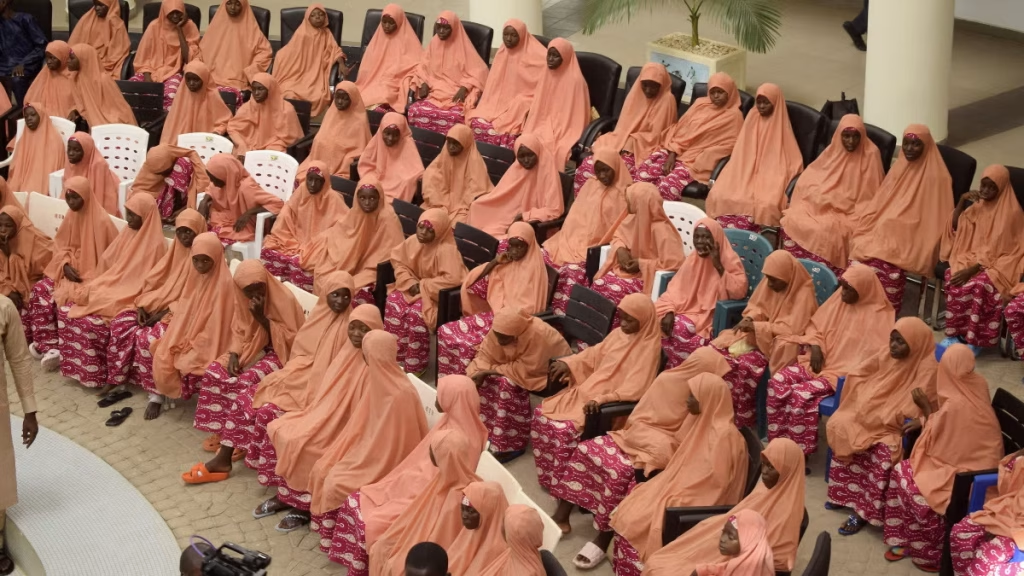
Major School Kidnapping Cases in Nigeria Since 2014
2014: Chibok, Borno State
In April 2014, Boko Haram abducted 276 schoolgirls from Government Girls Secondary School in Chibok, Borno State. The attack became Nigeria’s most widely known school kidnapping case and triggered the global Bring Back Our Girls campaign.

2018: Dapchi, Yobe State
In February 2018, Boko Haram abducted 110 schoolgirls from the Government Girls Science and Technical College in Dapchi, Yobe State. Most of the girls later regained their freedom, but the incident showed that schools remained vulnerable years after the Chibok abduction.
2020: Kankara, Katsina State
In December 2020, armed men abducted more than 300 schoolboys from Government Science Secondary School in Kankara, Katsina State. The attack marked a major spread of mass school abductions into the North-West.

2021: Kagara, Niger State
In February 2021, gunmen attacked Government Science College in Kagara, Niger State. They abducted 42 people, including students, staff and family members.
2021: Jangebe, Zamfara State
In February 2021, gunmen kidnapped over 270 schoolgirls from Government Girls Secondary School in Jangebe, Zamfara State. This event made people even more worried about girls’ education in at-risk communities.
2021: Afaka, Kaduna State
In March 2021, gunmen kidnapped 39 students from the Federal College of Forestry Mechanisation in Afaka, Kaduna State. This case added to Kaduna’s ongoing school security problems.
2021: Greenfield University, Kaduna State
In April 2021, gunmen kidnapped 23 students from Greenfield University in Kaduna State. This attack was one of the most troubling cases involving a university.
2021: Tegina, Niger State
In May 2021, gunmen kidnapped 136 children from an Islamic school in Tegina, Niger State. This case showed that even very young students were now at risk.
2021: Bethel Baptist High School, Kaduna State
In July 2021, gunmen kidnapped 121 students from Bethel Baptist High School in Kaduna State. This incident confirmed that Kaduna was one of the states most affected by school kidnappings.
2024: Kuriga, Kaduna State
In March 2024, armed men kidnapped 287 pupils and students from schools in Kuriga, Kaduna State. This became one of the largest school kidnapping cases in Nigeria in recent years.
2025: Kebbi State
In November 2025, gunmen kidnapped 25 schoolgirls from a government school in Kebbi State. This incident raised new worries about the safety of girls in boarding schools.
2025: St. Mary’s Catholic School, Niger State
In November 2025, armed attackers kidnapped hundreds of students and teachers from St. Mary’s Catholic School in Niger State. Early numbers were unclear because some victims escaped, but reports said more than 250 people were taken.
2026: Oyo State
In 2026, attacks on schools in Oyo State led to the kidnapping of 39 students and seven teachers. This incident caused new concern because large school kidnappings had mostly happened in northern Nigeria before.
Since 2014, there have been more than 20 major school kidnappings in Nigeria, affecting over 1,700 students and staff.
Why The Oyo Attack Matters
The Oyo incident is especially troubling because big school kidnappings have usually happened in northern Nigeria.
An attack in the South-West changes the national conversation. It suggests that weak school security, rural vulnerability, and poor intelligence coordination can expose children anywhere.
For parents, this creates fear across communities. For schools, it raises the cost of safety. For the government, it weakens public trust.
The Impact on Education
School kidnappings affect more than just the children who are taken. They impact whole communities.
Parents withdraw their children from school. Teachers avoid unsafe areas. Boarding schools lose trust. Girls’ education suffers even more because many families become afraid to send daughters to distant schools.
This leads to long-term harm. A child who misses school today may lose future income, confidence, and chances. When a community loses faith in education, it loses a key tool for progress.
Expert View
Rescue operations alone cannot solve Nigeria’s school kidnapping crisis. While rescue is important, preventing kidnappings is even more crucial.
The government should treat schools as critical infrastructure. This includes better fences, emergency communication, trained security staff, local intelligence, and quicker response teams.
Security agencies also need stronger coordination with community leaders. Many attacks begin with warning signs. When local intelligence fails, schools become exposed.
The country must also confront the ransom economy. As long as kidnapping remains profitable, armed groups will keep targeting vulnerable communities.
What Nigeria Must Do Now
Nigeria needs a national school safety plan that goes beyond just writing policies.
Every vulnerable school should have a risk assessment. Boarding schools in high-risk areas need stronger protection. State governments must track isolated schools, improve access roads, and create emergency response channels.
Security must also go beyond armed guards. Schools need communication tools, evacuation plans, parent-alert systems, and community reporting networks.
Most importantly, the government must restore public confidence. Parents need to know that sending a child to school does not mean exposing that child to danger.
Frequently Asked Questions
What was the Chibok school abduction?
The Chibok abduction happened in April 2014, when 276 schoolgirls were taken from Government Girls Secondary School in Chibok, Borno State.
Why are schools targeted in Nigeria?
Schools are targeted because they are often poorly protected. Armed groups also use mass abductions to demand ransom, gain attention, or pressure authorities.
Which regions have recorded major school kidnappings?
Major incidents have occurred in Borno, Yobe, Katsina, Niger, Kaduna, Zamfara, Kebbi, Kogi, and Oyo.
How do school kidnappings affect education?
They increase fear, reduce school attendance, force closures, and discourage parents from sending children to boarding schools.
What can the government do to stop school kidnappings?
The government can improve intelligence, secure vulnerable schools, strengthen community policing, respond more quickly to threats, and disrupt kidnapping-for-ransom networks.


2 thoughts on “From Chibok to Oyo: The School Kidnappings That Shook Nigeria Since 2014”