
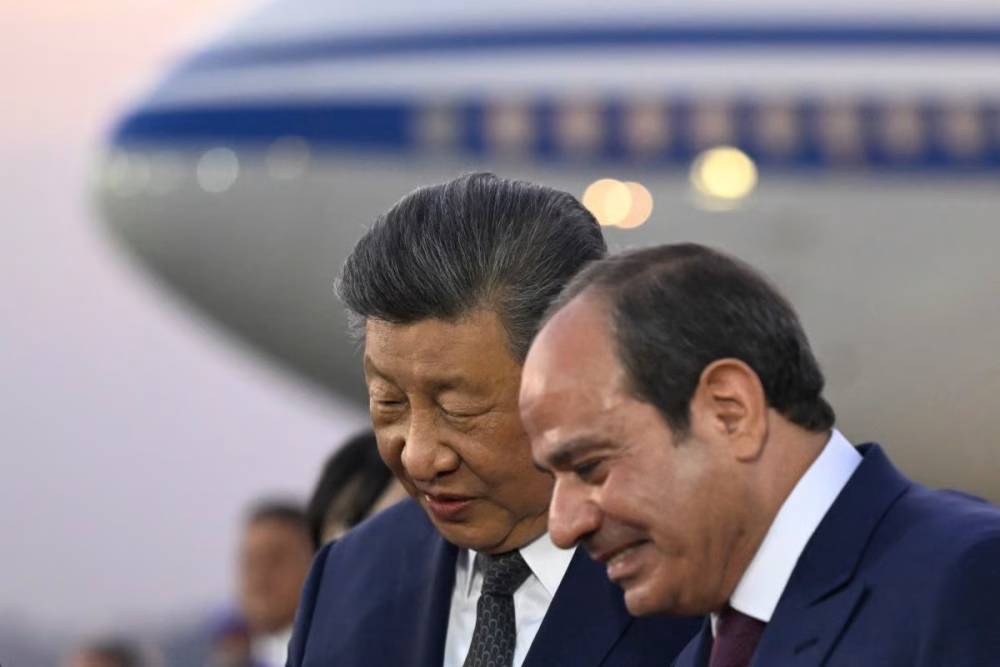
Chinese President Xi Jinping has expanded Beijing’s industrial footprint in Egypt’s Suez Canal Economic Zone (SCZONE) during his first visit to Cairo in ten years, intensifying China’s influence over critical global trade arteries.
The visit signals a deepening of the strategic partnership between the two nations, specifically through the expansion of Chinese-funded industrial hubs intended to boost Egypt’s manufacturing capacity and secure China’s logistics chain.
The development centers on the TEDA-Suez Economic and Trade Cooperation Zone, a key project under the Belt and Road Initiative (BRI). This hub serves as a primary entry point for Chinese companies looking to access African and European markets.
President Abdel Fattah el-Sisi has sought to leverage the investment to diversify Egypt’s economy, which has struggled with severe foreign currency shortages and high inflation in recent years.
The expansion includes new manufacturing facilities and logistics infrastructure aimed at reducing Egypt’s reliance on imports while increasing its export potential through the canal.
Strategic Investment in the Suez Canal Economic Zone
The SCZONE is a critical piece of infrastructure for global commerce, as a significant portion of the world’s container traffic passes through the Suez Canal. By embedding its industrial capacity directly within this zone, China reduces the risk of supply chain disruptions.
Beijing’s investment strategy in Egypt focuses on energy, infrastructure, and manufacturing. This includes the construction of a new administrative capital and various energy projects that tie Egypt’s industrial growth to Chinese technology and financing.
The expansion of the industrial hub comes as Egypt navigates a complex financial recovery. The government has worked closely with the International Monetary Fund (IMF) to secure loans and implement economic reforms, including the devaluation of the Egyptian pound to attract foreign direct investment.
For Egypt, these Chinese investments provide a critical alternative to Western funding, allowing Cairo to maintain what it terms strategic autonomy in its foreign policy.
This non-aligned approach is particularly evident as Egypt balances relations between the United States and China amid escalating tensions over the US-Iran conflict and trade wars.
The TEDA-Suez zone already hosts dozens of Chinese companies, but the latest agreements involve an increase in the scale of operations and the introduction of higher-tech manufacturing sectors.
Industry analysts suggest that China is using the SCZONE not just as a trade hub, but as a geopolitical anchor in North Africa to counter Western influence in the region.
The move follows a pattern of Chinese infrastructure investments across the continent, where Beijing provides the capital and expertise for large-scale projects in exchange for long-term strategic access.
Egyptian officials have emphasized that these partnerships are based on mutual benefit, focusing on job creation for local workers and the transfer of industrial technology.
The broader commercial impact includes the development of new shipping berths and streamlined customs procedures for Chinese goods entering the African market via the canal.
The current expansion is expected to increase the volume of Chinese firms operating within the zone, further integrating Egypt into the global Chinese supply chain as reported by The Africa Report.
Further implementation of these agreements will depend on the continued stability of the Egyptian economy and the ability of the government to manage its external debt obligations.
The next phase of the partnership will likely involve deeper cooperation in green energy and digital infrastructure, aligning with Egypt’s 2030 vision for sustainable development.
Explore more Business stories and analysis from Business Elites Africa.


