
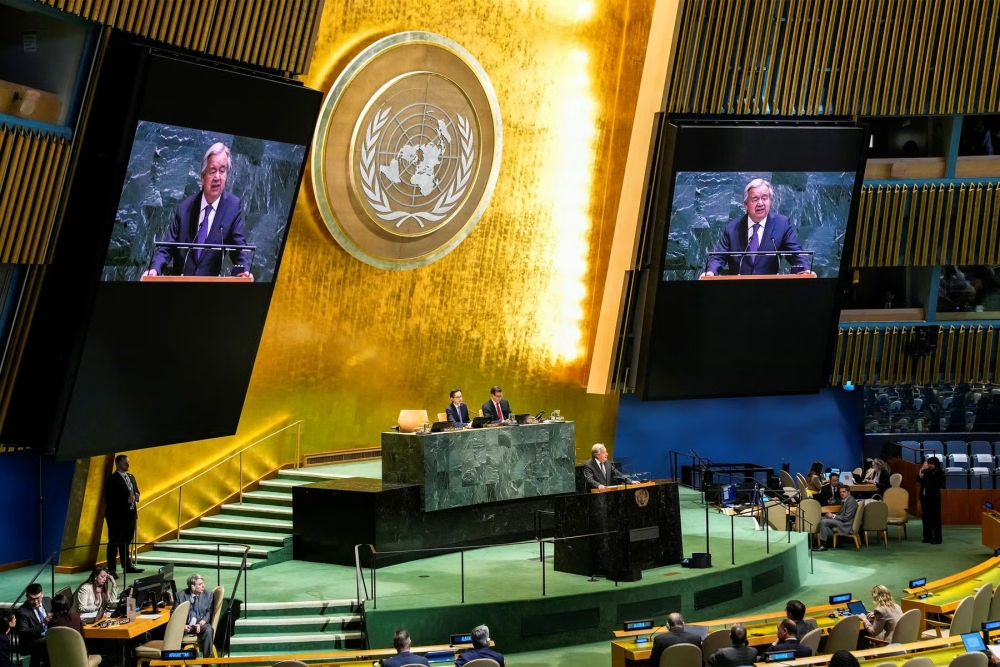
The 81st session of the United Nations General Assembly (UNGA) opened in New York on 22 September, 2026, placing African heads of state at the centre of a heavy diplomatic and economic agenda. With the continent grappling with protracted conflicts in Sudan and the Democratic Republic of Congo (DRC), a fresh Ebola outbreak, and the impending transition of UN leadership, the stakes for regional stability and investment have rarely been higher.
For African delegates, the assembly is not merely a diplomatic exercise but a critical forum to address the “Great Fracture” in global governance that continues to disadvantage developing economies. Central to the discussions is the urgent need for a reformed international financial architecture that provides more equitable access to capital, particularly as several African nations face a tightening debt noose and the inflationary pressures of regional instability.
The economic cost of the ongoing war in Sudan has already rippled across North and East Africa, disrupting vital trade routes and agricultural supply chains. Similarly, the persistence of violence in eastern DRC continues to threaten the security of the global green mineral supply chain, specifically the extraction of cobalt and copper essential for the electric vehicle industry. African leaders are expected to press the United Nations General Assembly for more robust peace-enforcement mechanisms that go beyond traditional peacekeeping.
Adding to the urgency is the resurgence of Ebola in parts of the continent. Public health experts at the World Health Organization have warned that without immediate international support for containment and vaccine distribution, the outbreak could trigger trade restrictions and travel bans reminiscent of previous crises. Such disruptions pose a direct threat to the nascent recovery of the African aviation and tourism sectors, which have become significant contributors to GDP in several sub-Saharan economies.
Geopolitical Volatility and the Mineral Supply Chain
The conflict in the DRC remains a primary concern for international investors and commodity markets. As the world’s largest producer of cobalt, any escalation in the eastern provinces directly impacts global technology manufacturing costs. African leaders at the UNGA are highlighting that the lack of security in these regions is not just a humanitarian failure but a significant barrier to the continent’s industrialisation and its role in the global energy transition.
In Sudan, the humanitarian disaster is accompanied by a total collapse of the formal economy. The International Monetary Fund has previously noted that the conflict has destroyed infrastructure and decimated the country’s productive capacity. For neighbouring countries like Egypt and Ethiopia, the spillover effects include increased pressure on public finances due to refugee influxes and the loss of export markets. Diplomats in New York are seeking a commitment from the UN Security Council for a more assertive mediation process to prevent a permanent regional economic depression.
Beyond immediate crises, the race to succeed UN Secretary-General António Guterres is quietly dominating the corridors of the 81st Assembly. Guterres’ second term is set to conclude at the end of 2026, and the search for his successor is well underway. There is a growing consensus among the African Union member states that the next Secretary-General should be an African candidate, or at the very least, an individual committed to a radical overhaul of the UN’s development financing model.
The choice of the next UN leader will have material consequences for Africa’s economic future. The current administration has overseen the launch of the Sustainable Development Goals (SDG) Stimulus, but many African finance ministers argue that the pace of implementation remains too slow. The next Secretary-General will be responsible for steering the global body through the final push toward the 2030 Agenda, during which Africa requires an estimated $1.3 trillion annually to achieve its development targets.
Trade policy also remains a high priority as African nations seek to operationalise the African Continental Free Trade Area (AfCFTA) in a global environment increasingly defined by protectionism. The UNGA provides a platform for the continent to advocate for the removal of non-tariff barriers and for fairer treatment in international carbon markets. As the assembly progresses, the ability of African leaders to present a unified front on these economic issues will determine whether the 81st session delivers tangible results or remains a theatre for political rhetoric.
The general debate is scheduled to continue through the week, with several high-level meetings focused on financing for development and the digital economy. The outcomes of these sessions will set the tone for the upcoming G20 summit and will likely influence investor sentiment regarding African sovereign debt markets for the remainder of the year.
Explore more News stories and analysis from Business Elites Africa.


