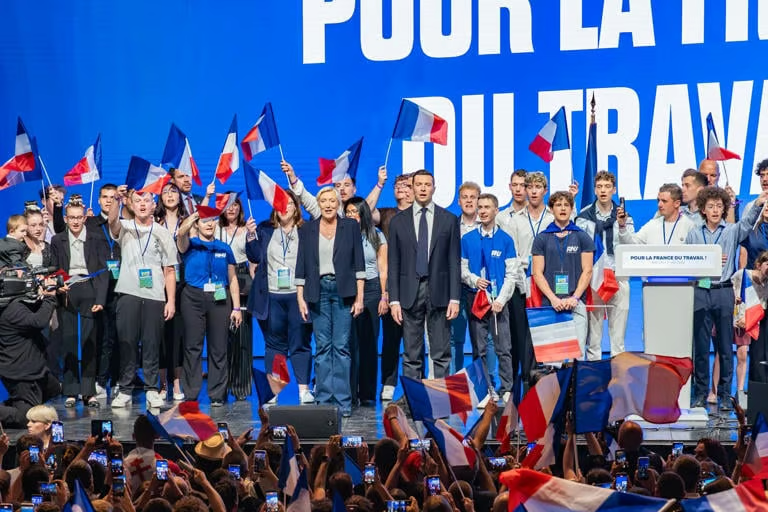
The surge of far-right nationalism across Europe is creating a new era of economic uncertainty for African markets, as protectionist policies and tougher migration stances begin to reshape trade agreements and financial flows. From France and Germany to the Netherlands and Italy, the political shift toward “economic nationalism” threatens to disrupt decades of established development cooperation and market access for African exporters.
For African economies, the stakes are exceptionally high. The European Union remains Africa’s largest trading partner, accounting for approximately 26% of the continent’s total trade. However, the rise of parties advocating for “Europe First” agendas is casting doubt on the future of the Samoa Agreement—the successor to the Cotonou Agreement—and various Economic Partnership Agreements (EPAs) that govern the flow of goods between the two continents.
Financial analysts warn that the immediate consequence of this political realignment is likely to be a tightening of development aid. Historically, European aid has been framed as a tool for poverty reduction and institutional strengthening. Increasingly, nationalist governments are pivoting toward a transactional model, where aid is strictly conditional on African nations’ willingness to accept mass deportations and implement tighter border controls.
This shift is already visible in the European Commission’s budget negotiations, where right-leaning blocs are pushing to redirect funds from international development toward domestic security and border infrastructure. For countries in the Sahel and North Africa, which rely heavily on European budgetary support, this represents a significant risk to public finance stability.
Protective Barriers and the Climate Finance Gap
Beyond direct aid, the rise of Euro-nationalism is expected to accelerate the implementation of trade barriers under the guise of environmental or security standards. The Carbon Border Adjustment Mechanism (CBAM), while designed to prevent carbon leakage, is viewed by many African manufacturers as a protectionist tool. Nationalist governments are less likely to support the financial exemptions or technical assistance that African industries need to adapt to these new regulations.
Climate finance is perhaps the most vulnerable sector. Far-right parties in Europe have consistently expressed scepticism regarding the European Green Deal and international climate reparations. At a time when African nations are seeking billions in investment for energy transition and climate adaptation, a right-ward shift in the European Parliament could lead to a significant retraction of previous commitments made under the United Nations climate framework.
In the agricultural sector, which remains the backbone of many African economies, the rise of nationalist sentiment among European farmers is already translating into political pressure to limit imports. By invoking “food sovereignty,” European governments may introduce stricter sanitary and phytosanitary (SPS) measures that effectively lock out African produce from the single market. This would have devastating consequences for SMEs across East and West Africa that have spent years aligning with EU standards.
The geopolitical implications are also forcing a strategic rethink in African capitals. As Europe turns inward, African leaders are increasingly looking toward the African Continental Free Trade Area (AfCFTA) as a necessary buffer against external shocks. There is also a growing trend toward diversifying partnerships with BRICS+ nations, which offer alternative sources of infrastructure financing without the same level of political conditionality often imposed by European donors.
The commercial impact of these political shifts also extends to the private sector and investment flows. European firms operating in Africa may face domestic pressure to “near-shore” their supply chains, moving operations back to Europe or closer to home to satisfy nationalist demands for job creation. This potential divestment could hinder technology transfer and the growth of the African manufacturing sector.
However, some experts argue that the shift is not entirely one-sided. African nations with significant energy resources, particularly in the natural gas sector, maintain leverage as Europe seeks to diversify away from Russian energy. Governments in Nigeria, Algeria, and Mozambique continue to negotiate from a position of relative strength, though even these deals are being scrutinised by European parties wary of long-term fossil fuel dependencies.
What happens next will depend largely on the outcome of several key European elections and the subsequent configuration of the EU’s multi-annual financial framework. African trade ministers and the African Union commission will likely seek to formalise more robust, legally binding trade guarantees to protect against the volatility of European domestic politics. For now, the era of predictable, value-based cooperation appears to be giving way to a more fragmented and transactional economic relationship.
Explore more Insight & Analysis stories and analysis from Business Elites Africa.