
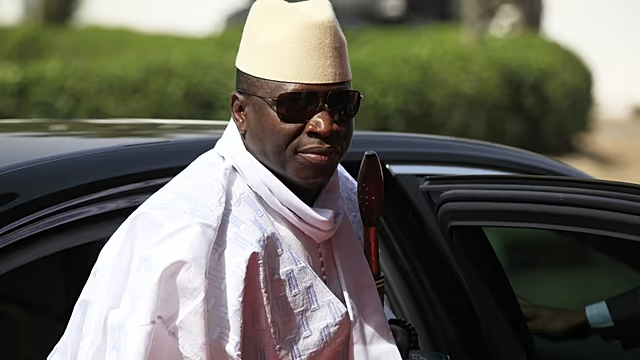
The Gambian government has announced it will allocate $2.5 million from the sale of assets belonging to former President Yahya Jammeh towards compensating victims of his brutal 22-year regime. This move marks a significant step in the nation’s efforts to deliver justice and redress for widespread human rights abuses committed during his rule.
The funds are derived from the sale of one of several opulent mansions seized from Jammeh, who fled The Gambia in 2017 after refusing to concede defeat in a presidential election. The compensation scheme is a direct outcome of the recommendations made by the Truth, Reconciliation and Reparations Commission (TRRC), which documented extensive abuses.
Jammeh’s time in power, from 1994 to 2017, was characterised by accusations of politically motivated murders, enforced disappearances, torture, and sexual violence against opponents, journalists, and civilians. The TRRC, established in 2017, heard testimonies from hundreds of victims, revealing the horrific scale of human rights violations.
The allocation of these funds underscores the government’s commitment to fulfilling the TRRC’s mandate for reparations, which includes financial, medical, and psychosocial support for survivors. This initial tranche of funds is expected to be distributed to a designated number of victims, with further compensation anticipated as more of Jammeh’s assets are recovered and liquidated.
Progress in Asset Recovery and Accountability Efforts
The recovery of assets belonging to Yahya Jammeh has been a complex and protracted process, involving both domestic and international legal efforts. Investigations have revealed that Jammeh amassed a vast personal fortune through illicit means, including embezzlement of state funds and the exploitation of public resources. Properties, businesses, and bank accounts linked to the former president have been identified across multiple jurisdictions.
The sale of the specific mansion yielding the $2.5 million represents a tangible success in these ongoing asset recovery initiatives. The government has stressed that these efforts will continue, aiming to seize all assets illegally acquired by Jammeh and his associates to ensure maximum possible compensation for those who suffered under his rule.
Victim groups and human rights organisations have widely welcomed the announcement, although many emphasise that the journey towards full accountability and reparations is far from over. Lawyers representing victims have highlighted the importance of transparent and efficient disbursement mechanisms to ensure that the funds reach the intended beneficiaries without delay.
Beyond financial compensation, the government’s broader transitional justice agenda includes institutional reforms, memorialisation projects, and potential prosecutions of those most responsible for the abuses. Efforts are also ongoing to bring Jammeh himself to justice, with calls for his extradition from Equatorial Guinea, where he remains in exile, to face charges for his alleged crimes.
The Gambian Ministry of Justice has indicated that a detailed plan for the disbursement of the $2.5 million will be released shortly, outlining the criteria and process for victims to access these funds. This development signals a critical juncture for a nation striving to reconcile with its past and build a foundation for future governance based on justice and respect for human rights, as reported by Africanews.
International partners, including the United Nations and various human rights bodies, have been closely monitoring The Gambia’s transitional justice process. They have offered technical and financial support to the TRRC and subsequent government initiatives, underscoring the global recognition of the importance of addressing impunity for severe human rights violations, as outlined in reports from organisations like Human Rights Watch.
The focus now shifts to the effective implementation of the compensation scheme and the continuation of comprehensive justice efforts, ensuring that the legacy of Jammeh’s rule is fully confronted and the rights of all Gambians are protected moving forward.
Explore more News stories and analysis from Business Elites Africa.


