
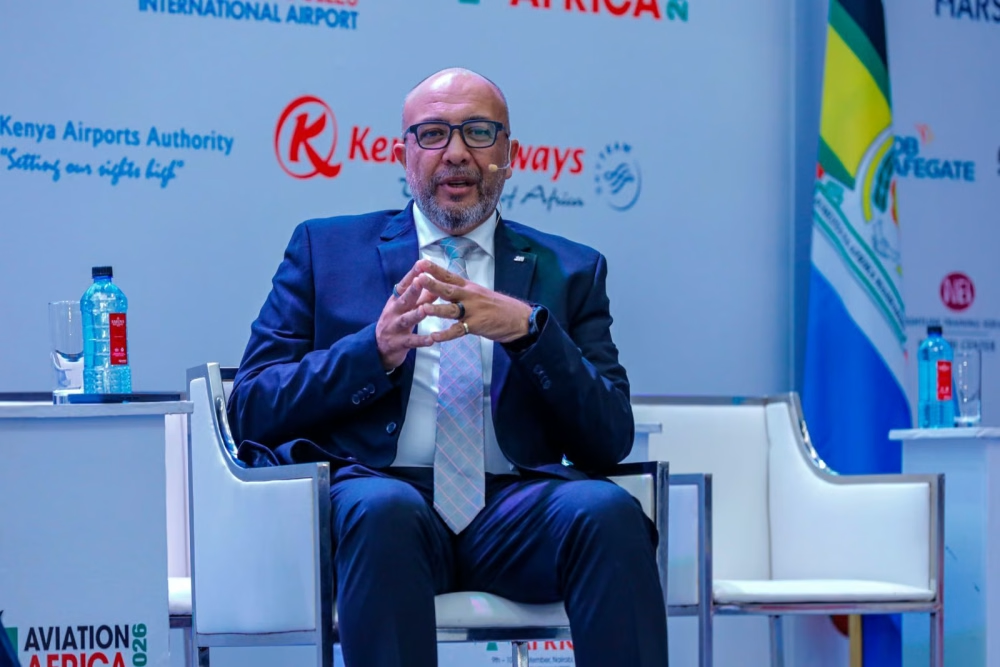
George Kamal, a senior figure instrumental in the strategic restructuring of Kenya Airways (KQ), has announced his departure from the airline, marking a significant leadership transition at a time when the carrier is struggling to cement its fragile financial recovery. Kamal’s exit comes amidst a period of intense scrutiny for the national carrier, which continues to navigate a complex turnaround plan aimed at reversing a decade of losses and operational inefficiencies.
Reflecting on his tenure, Kamal noted that the airline missed critical windows for growth and modernization, largely due to institutional constraints and a debt-heavy balance sheet that limited the board’s agility. He described the environment as one that frequently “tied our hands,” preventing the management team from pursuing aggressive market expansions or fleet renewals that could have positioned the airline more competitively against regional rivals like Ethiopian Airlines and RwandAir.
The departure of a key executive during the mid-stages of the airline’s recovery roadmap, known internally as Project Kifaru, raises fresh questions about the continuity of the current strategy. Kenya Airways has been under immense pressure from the National Treasury of Kenya to reduce its reliance on state bailouts and transition toward a self-sustaining commercial model. While the airline has shown signs of operational improvement, the structural issues Kamal alluded to—specifically the interplay between state ownership and commercial independence—remain a central challenge for the leadership team.
Navigating State Interests and Market Volatility
The “tied hands” Kamal referenced likely point to the stringent conditions attached to government support and the lingering legacy of the airline’s 2017 debt restructuring. Kenya Airways has remained burdened by significant dollar-denominated debt, which has made it vulnerable to the volatility of the Kenyan Shilling. Although the airline reported a milestone in its 2024 half-year financial results with an operating profit of KSh 1.3 billion, it still faced a substantial net loss after accounting for finance costs and foreign exchange fluctuations.
This financial tightrope has often meant that capital-intensive projects, such as the acquisition of newer, more fuel-efficient aircraft, have been deferred. Industry analysts suggest that these missed opportunities have allowed competitors to capture a larger share of the intra-African travel market. The inability to move quickly on strategic partnerships or route expansions has been a recurring theme in the critique of KQ’s governance, where every major decision often requires alignment with multiple state stakeholders.
The exit of Kamal also coincides with the government’s ongoing search for a strategic equity partner. The Ministry of Transport has previously indicated that the long-term survival of the carrier depends on securing a private investor capable of injecting fresh capital and technical expertise. However, the same institutional hurdles that Kamal described as restrictive for internal management may also be acting as a deterrent for potential global investors who are wary of the level of state involvement in the airline’s day-to-day operations.
Operationally, the airline has managed to improve its passenger load factors and cargo revenue, but the exit of senior talent suggests a possible friction point regarding the pace and direction of the turnaround. Kamal’s departure follows a series of executive shuffles over the last three years, as the board seeks a formula that balances the public mandate of a national carrier with the profitability requirements of a modern airline. The loss of institutional memory at this stage could complicate the final phases of the Project Kifaru implementation.
For the broader African aviation sector, Kamal’s exit and his candid assessment of the airline’s limitations serve as a reminder of the difficulties faced by legacy carriers in the region. While the demand for air travel in Africa is projected to grow significantly over the next decade, the ability of state-owned airlines to capture this growth is often hampered by the very structures intended to protect them. The transition to a leaner, more private-sector-led model remains the primary goal for the KQ board, though the path to that destination appears increasingly fraught with internal and external obstacles.
The Kenya Airways Board of Directors is expected to name an interim replacement or initiate a global search for a successor in the coming weeks. The new appointee will inherit a mandate to finalize the debt restructuring process and prepare the airline for a potential equity sale, all while managing the high expectations of the Kenyan public and the government. The immediate focus will remain on stabilizing the leadership team to ensure that the current momentum in operating performance is not lost during this period of transition.
Explore more Companies stories and analysis from Business Elites Africa.


