
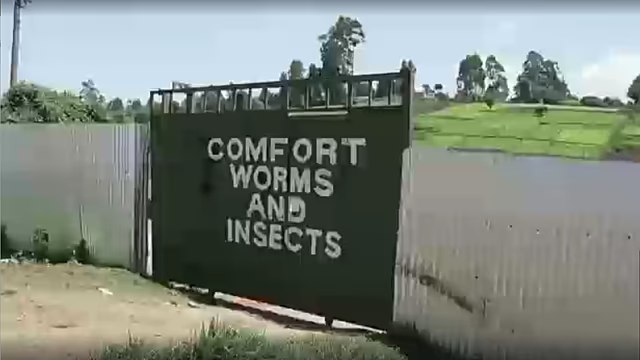
Kenyan farmers are increasingly adopting organic fertilisers produced by redworms and Black Soldier Fly larvae to combat systemic soil degradation and reduce their dependency on costly synthetic inputs.
The transition comes as agricultural producers across East Africa struggle with the dual challenge of declining soil fertility and the volatile pricing of imported chemical fertilisers.
By utilising vermicomposting—the process of using worms to decompose organic matter—and the frass produced by Black Soldier Fly (BSF) larvae, farmers are converting organic waste into nutrient-rich compost that restores essential minerals to the earth.
This shift is driven by a growing recognition that long-term reliance on synthetic NPK (nitrogen, phosphorus, and potassium) fertilisers has led to soil acidification and a loss of microbial biodiversity, which ultimately lowers crop yields over time.
The process involves introducing specific insect species to organic waste streams, such as market refuse and crop residues. Redworms break down the organic matter into castings, while BSF larvae consume waste rapidly, leaving behind a residue known as frass, which serves as a potent organic fertiliser.
According to reports on sustainable land management, these biological fertilisers improve soil structure and water retention, making crops more resilient to the erratic rainfall patterns currently affecting the region.
Economic Shift Toward Circular Agriculture
The move toward insect-based fertilisers is creating a new commercial ecosystem in Kenya, with the emergence of small and medium enterprises (SMEs) specialising in larvae production and organic waste collection.
These ventures operate on a circular economy model: they collect organic waste from urban centres and farms, process it using insects, and sell the resulting fertiliser and insect protein back to the agricultural sector.
The Food and Agriculture Organization (FAO) has long advocated for integrated soil fertility management to ensure food security, noting that organic amendments are critical for maintaining the long-term viability of African farmland.
For the individual farmer, the primary incentive is the reduction of operational costs. Synthetic fertilisers are often subject to global supply chain disruptions and currency fluctuations, making them prohibitively expensive for smallholders.
By producing fertiliser on-site or sourcing it from local insect-farming SMEs, farmers are insulating their businesses from international market shocks while improving the quality of their produce.
Beyond fertiliser, the BSF larvae themselves are being harvested and processed into high-protein animal feed. This provides a secondary revenue stream for producers and lowers the cost of poultry and fish farming, further integrating the local value chain.
Agricultural experts note that this biological approach addresses the root cause of soil infertility rather than providing a temporary chemical fix. The organic matter reintroduced into the soil promotes the growth of beneficial fungi and bacteria, which naturally unlock nutrients for the plants.
The adoption of these techniques is gaining momentum in regions where soil exhaustion has become a critical barrier to productivity. The use of regenerative agriculture practices is now seen as a necessary step for Kenya to maintain its position as a regional food basket.
The next phase for this sector involves the standardisation of organic fertilisers and the development of certification frameworks to allow farmers to sell their “insect-grown” produce at a premium in organic export markets.
Governmental support through agricultural extension services is expected to play a key role in scaling these practices from early adopters to the wider farming population across Kenya’s diverse ecological zones.
Explore more Business stories and analysis from Business Elites Africa.


