
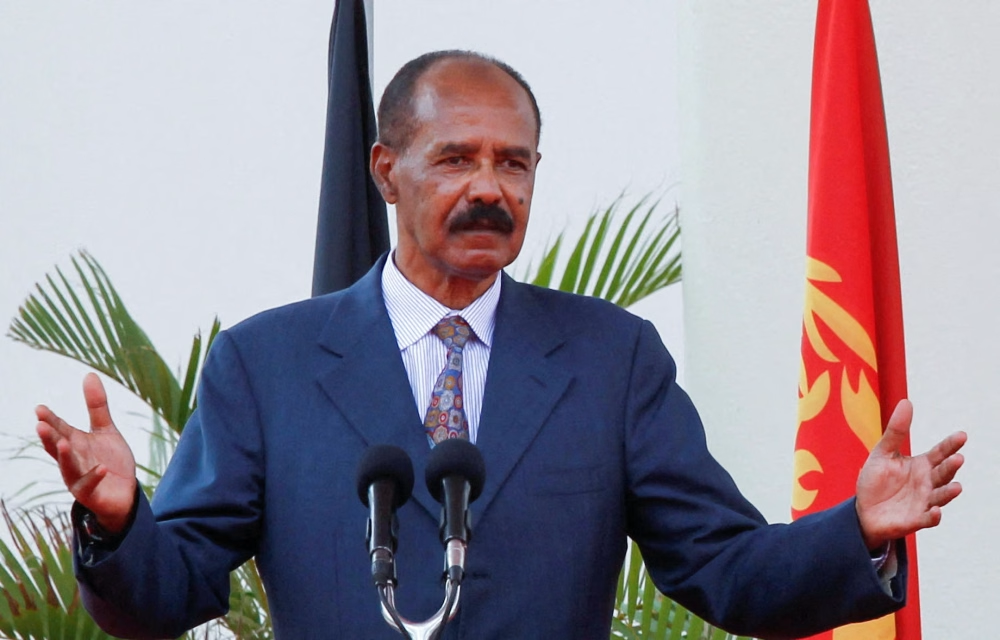
The United States government has allowed the state of emergency concerning the conflict in northern Ethiopia to expire, effectively lifting the sanctions regime previously imposed on Eritrea. The decision marks a pivotal shift in Washington’s diplomatic and economic posture toward the Horn of Africa, potentially ending years of near-total commercial isolation for the Eritrean state.
The removal of these measures follows the expiration of Executive Order 14046, which was originally signed to address the humanitarian and security crisis in Ethiopia’s Tigray region. The order had served as the legal foundation for the U.S. Department of the Treasury to target Eritrean government officials, military entities, and the ruling People’s Front for Democracy and Justice (PFDJ) for their involvement in the cross-border conflict.
As the legal mandate for these sanctions lapsed on 23 September 2026, the various designations against Eritrean entities have been nullified. This development comes at a precarious moment for the region, as reports from The Africa Report suggest that hostilities in the northern Ethiopian borderlands are beginning to intensify once again, threatening the fragile peace established by the 2022 Pretoria Agreement.
For Eritrea, the lifting of sanctions represents a significant opportunity to reintegrate into the global financial system. Since 2021, the country has been largely cut off from international banking networks and foreign direct investment due to the perceived risk of secondary U.S. sanctions. The removal of these barriers is expected to facilitate easier access to trade finance and encourage renewed interest from international mining and logistics firms.
Regional Trade Prospects and Infrastructure Development
The commercial implications of this policy shift extend far beyond Eritrea’s borders, particularly regarding the strategic control of Red Sea trade routes. Eritrea possesses two major deep-water ports, Massawa and Assab, which have historically been underutilised due to geopolitical tensions and restrictive sanctions. The end of U.S. restrictions may pave the way for major infrastructure upgrades at these ports, offering landlocked Ethiopia a vital alternative to the Port of Djibouti.
Logistics experts suggest that a rehabilitated Port of Assab could significantly reduce transport costs for Ethiopian exports and imports, provided that the political relationship between Asmara and Addis Ababa remains stable. However, the current “heating up” of regional tensions serves as a reminder to investors that political risk remains high. Any renewed full-scale conflict would likely see the immediate re-imposition of Western restrictions, potentially through new executive orders.
In the extractive sector, the lifting of sanctions could accelerate stalled projects in Eritrea’s mining belt. The country is home to significant deposits of gold, copper, and potash. The Colluli Potash Project, widely regarded as one of the world’s most significant sulphate of potash deposits, has faced numerous financing hurdles linked to the country’s pariah status. With the U.S. state of emergency now expired, the project’s backers may find it easier to secure the necessary capital from international lenders who were previously wary of compliance risks.
Despite the legal removal of sanctions, the U.S. administration has not fully endorsed the Eritrean government’s recent actions. Diplomatic sources indicate that the decision to let the emergency order expire was a procedural necessity rather than a formal vote of confidence. Washington continues to monitor reports of human rights concerns and the movement of Eritrean troops along the Ethiopian border. The U.S. State Department has frequently called for a permanent withdrawal of Eritrean forces from Ethiopian territory to ensure long-term regional stability.
For global businesses and African trade partners, the next steps will involve a cautious reassessment of Eritrea’s regulatory environment. While the U.S. Treasury’s Office of Foreign Assets Control (OFAC) will no longer enforce the Ethiopia-related sanctions against Eritrean targets, other compliance frameworks and general investment risks remain. Companies will likely wait for further guidance from the U.S. State Department regarding the future of bilateral diplomatic relations before committing to long-term capital investments in Asmara.
The coming months will be critical in determining whether this opening leads to a genuine economic dividend for Eritrea or if renewed regional volatility prompts a return to international isolation. The Eritrean government has yet to issue a formal response to the lifting of the measures, but the development is expected to be a central topic of discussion at the next African Union summit regarding regional integration and the African Continental Free Trade Area (AfCFTA).
Explore more News stories and analysis from Business Elites Africa.


