

The 2026 FIFA World Cup has entered its knockout pathway as teams secure places in the expanded Round of 32. This new format, introduced after the expansion to 48 teams, has reshaped qualification dynamics, tactical planning, and tournament progression.
The knockout stage begins from June 28 to July 3, with teams advancing from a group system that now includes 12 groups and eight best third-placed teams.
Football analysts say this structure has increased unpredictability while rewarding tactical discipline over pure attacking dominance.
Qualified Teams for the Round of 32
Below is a team-by-team expert analysis of nations that have already secured qualification.
🇲🇽 Mexico (Group A)

Mexico set the tone for the tournament with disciplined defending and efficient finishing. Their structure remains compact, with a focus on transition play and home advantage control.
Analyst view: Mexico’s biggest strength is game management under pressure, but they still struggle against high-press systems.
🇺🇸 United States (Group D)

The United States combine athletic intensity with structured attacking phases. Their early qualification reflects improved squad maturity and tactical flexibility.
Analyst view: The USA are dangerous in transition but still inconsistent in breaking low defensive blocks.
🇩🇪 Germany (Group E)

Germany’s qualification signals a return to tournament efficiency after recent group-stage failures in previous editions.
Analyst view: Germany’s structured possession and midfield control make them a balanced knockout contender, but defensive transitions remain a concern.
🇦🇷 Argentina (Group J)

Argentina continue their dominance with elite attacking cohesion and clinical finishing. Their group-stage control reflects high tactical intelligence and experience.
Analyst view: Argentina remain one of the most complete teams, combining creativity, control, and tournament-winning mentality.
🇫🇷 France (Group I)

France’s qualification showss their depth and attacking power. They maintain flexibility across multiple formations.
Analyst view: France’s biggest advantage is squad depth, allowing tactical rotation without performance drop-off.
🇳🇴 Norway (Group I)

Norway’s qualification is one of the strongest emerging stories of the tournament. Their physical pressing and direct attacking style have proven effective.
Analyst view: Norway thrive on intensity but may struggle against possession-dominant elite teams.
🇨🇴 Colombia (Group K)

Colombia’s qualification reflects disciplined defending and efficient attacking transitions.
Analyst view: Colombia are structured but rely heavily on individual brilliance in tight matches.
🇨🇭 Switzerland (Group B)

Switzerland remain one of the most tactically disciplined teams in world football, showing consistency and defensive organization.
Analyst view: Their low-risk style makes them difficult to break down, especially in knockout scenarios.
🇧🇦 Bosnia and Herzegovina (Group B)
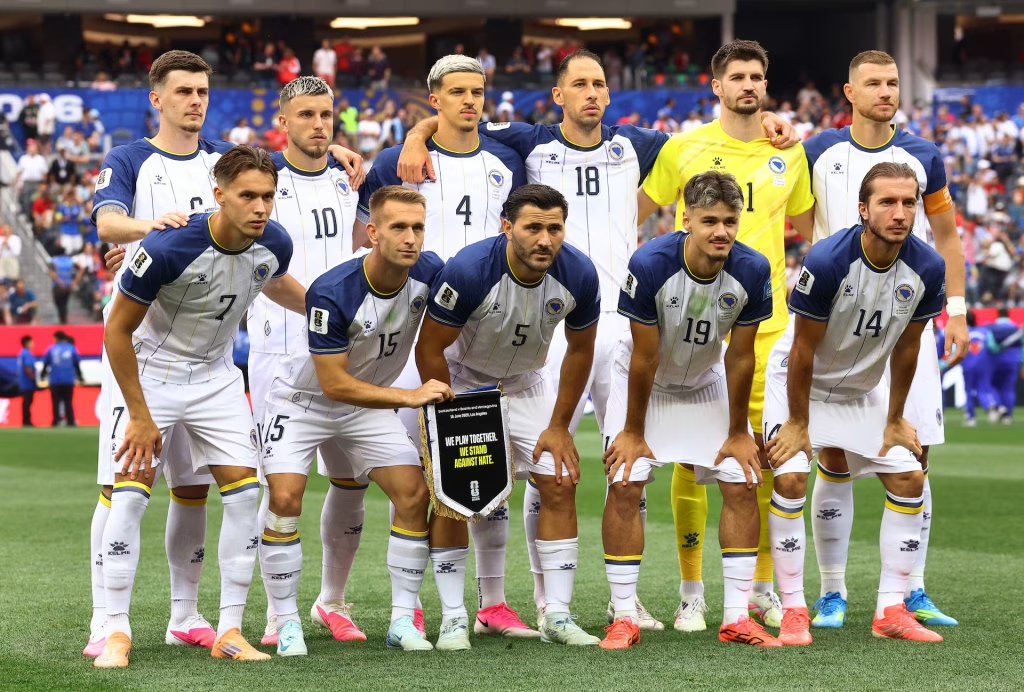
Bosnia’s qualification as a strong third-placed team reflects resilience and efficiency in decisive matches.
Analyst view: They are structured but lack attacking depth compared to elite nations.
🇧🇷 Brazil (Group C)

Brazil advance with attacking confidence and technical superiority, led by dynamic forward play.
Analyst view: Brazil remain tournament favourites when in rhythm, but defensive transitions can be exposed under pressure.
🇿🇦 South Africa (Group A)
📌 Image slot: South Africa celebration
South Africa’s qualification marks one of the tournament’s most significant breakthroughs, driven by discipline and structured counter-attacking.
Analyst view: Their compact system makes them dangerous against possession-heavy teams.


