
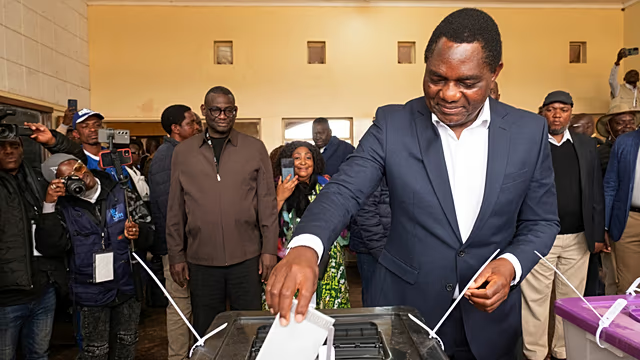
Zambian President Hakainde Hichilema was sworn in for a second term on Tuesday, securing a mandate to continue his economic stabilisation program while the main opposition leader remains detained on treason charges.
The inauguration follows a contentious election cycle that saw Hichilema maintain his hold on power, though the proceedings were overshadowed by the absence of his primary challenger. The opposition leader, who finished as the runner-up in last month’s polls, is currently held in jail facing charges of treason.
The political tension comes at a critical juncture for Zambia, which has spent much of Hichilema’s first term attempting to recover from a severe debt crisis and a collapse in investor confidence. The recent swearing-in ceremony signals a continuity of the current administration’s pro-market policies, but the imprisonment of a major political rival introduces new risks regarding domestic stability.
Hichilema’s first term was defined by a rigorous effort to navigate the G20 Common Framework for debt treatments. Zambia became the first African nation to default on its sovereign debt during the COVID-19 pandemic, leaving the treasury struggling to service billions of dollars in loans to international bondholders and bilateral lenders, including China.
Working closely with the International Monetary Fund (IMF), the Hichilema administration implemented a series of austerity measures and fiscal reforms designed to restore macroeconomic stability. These included removing fuel subsidies and introducing new tax measures to widen the domestic revenue base.
Debt Restructuring and Mining Sector Priorities
For investors and international creditors, the primary focus of Hichilema’s second term will be the finalisation of long-term debt sustainability and the aggressive expansion of the mining sector. Copper remains the backbone of the Zambian economy, and the government has set an ambitious target to increase copper production to 3 million tonnes per annum.
The administration has sought to attract foreign direct investment into the mining industry by streamlining licensing processes and improving the regulatory environment for mining houses. This strategy is intended to hedge against volatility in global commodity prices and reduce the country’s reliance on a narrow export base.
However, the arrest of the opposition leader on treason charges has sparked concerns among human rights observers and some diplomatic partners. Political stability is a key metric for foreign investors, and the perception of a narrowing democratic space could complicate efforts to attract the large-scale capital required for infrastructure and energy projects.
Zambia’s energy security remains a significant hurdle for industrial growth. The country has suffered from erratic power supplies due to its heavy reliance on hydroelectric power, which has been vulnerable to climate-induced droughts. The government is expected to prioritise the diversification of the energy mix, increasing investment in solar and wind power to support the mining industry’s energy-intensive operations.
The second term will also require Hichilema to manage the social fallout of his economic reforms. While the IMF-backed programme has improved the balance of payments and stabilised the kwacha, the cost of living has remained high for many Zambians, providing a fertile ground for opposition rhetoric.
The immediate next steps for the administration include the announcement of a new cabinet and the presentation of the next fiscal budget. Markets will be watching for any shift in the government’s approach to public spending and whether the administration will move to resolve the legal disputes with the opposition to lower political risk.
Explore more Politics stories and analysis from Business Elites Africa.


