
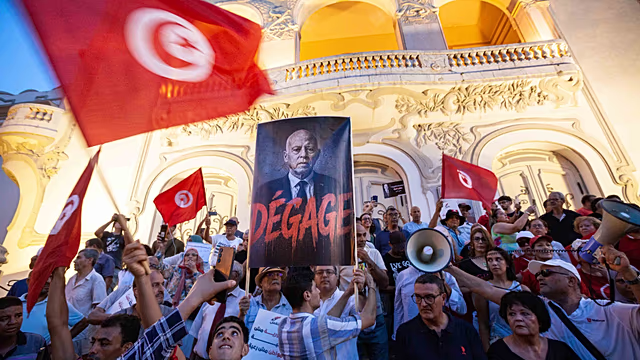
Protests have erupted across Tunisia demanding the resignation of President Kais Saied as a severe heatwave exposes the collapse of the country’s water and electricity infrastructure.
Demonstrators in Tunis and other major urban centres are citing a total failure of basic state services, with many households reporting prolonged power outages and critical water shortages during a period of extreme summer heat.
According to reporting by Africanews, the unrest is driven by growing economic pressures that have left a significant portion of the population unable to afford basic utilities or access consistent water supplies.
The current volatility follows years of political consolidation by President Saied, who suspended the parliament in July 2021 and has since moved to concentrate executive power, sidelining traditional political parties and judicial bodies.
The utility failures are not isolated incidents but part of a systemic decline in Tunisia’s national grid and water management systems. The Tunisian Electricity and Gas Company (STEG) has struggled to maintain stability during peak demand, leading to widespread frustration among both residential consumers and small business owners.
Economic Instability and IMF Deadlock
The social unrest is deeply linked to Tunisia’s precarious financial position and a protracted deadlock with the International Monetary Fund (IMF). Tunisia has sought a multi-billion dollar loan to avoid default and stabilise its currency, but negotiations have repeatedly stalled over the required structural reforms.
The IMF has consistently pushed for the removal of subsidies on basic goods and services, as well as the liberalisation of the economy, to reduce the state’s fiscal deficit. President Saied has resisted these measures, arguing that austerity would place an intolerable burden on the poor and fuel further social instability.
This reluctance to implement reforms has left the country without a critical financial safety net, limiting the government’s ability to invest in the very infrastructure now failing during the heatwave. Public finance remains under severe strain, with inflation eroding the purchasing power of Tunisian citizens.
The agricultural sector, a cornerstone of the Tunisian economy, has also been decimated by consecutive years of drought. This has led to a sharp decline in the production of cereals and olive oil, two of the country’s primary exports, further reducing foreign exchange reserves.
For SMEs and manufacturers, the combination of power cuts and high inflation has increased operational costs and disrupted supply chains. Many businesses are operating on limited hours or relying on expensive private generators to maintain production.
The current protests mark a shift from targeted labour disputes to a broader demand for systemic political change. Protesters argue that the concentration of power in the presidency has removed the institutional checks necessary to address the economic crisis effectively.
Security forces have increased their presence in the capital to prevent the escalation of demonstrations. However, the underlying economic triggers—specifically the lack of water and electricity—remain unresolved.
The immediate outlook for Tunisia depends on whether the government can restore basic services and reach a viable agreement with international creditors. Without a significant injection of capital or a change in economic policy, the risk of further widespread unrest remains high.
Tunisia is expected to face further pressure from international monitors and creditors as it attempts to manage its debt obligations amidst a shrinking economic base.
Explore more News stories and analysis from Business Elites Africa.


